
Ob/Gyn
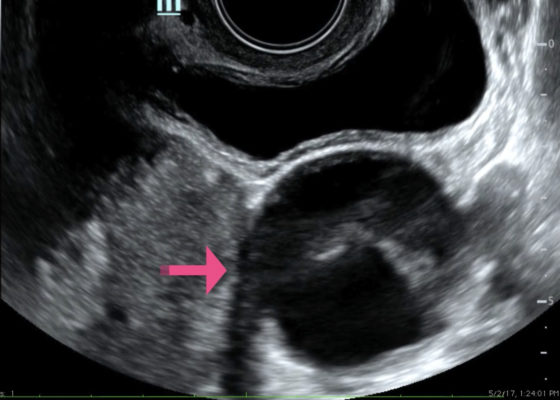

Point-of-care Ultrasound for the Diagnosis of Ovarian and Fallopian Tube Torsion
DOI: https://doi.org/10.21980/J8D06KThe ultrasound video clip demonstrates a transverse view of the pelvis using the endocavitary probe. The bladder can be seen on the anterior portion of the scan (yellow arrow), while the uterus with an intrauterine pregnancy is visible posteriorly (blue arrow). The thickened appearance of the uterine wall is also indicative of pregnancy. A large, anechoic cystic structure measuring approximately 5 cm is seen in the vicinity of the patient’s left adnexa (pink arrow), which raises concerns for ovarian torsion.
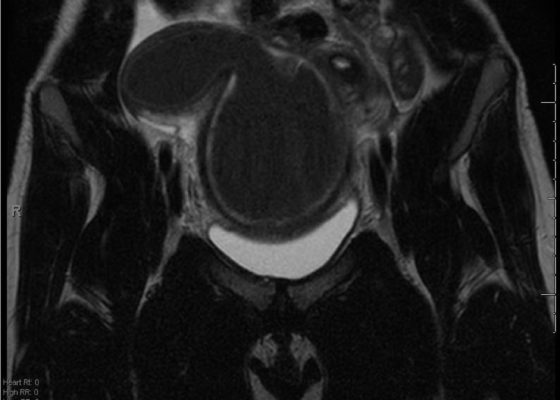
A Rare Cause of Pelvic Pain in a Teenage Girl
DOI: https://doi.org/10.21980/J87D0WDue to pain out of proportion to her exam, an ultrasound of her pelvis was obtained and showed a blood-filled distended uterus, or hematometrocolpos (white arrow), with a 4.9 cm right ovarian cyst (blue arrow). A pelvic magnetic resonance imaging (MRI) then revealed an obstructed right hemi-vagina, normal left uterus and vagina and ipsilateral renal agenesis (red arrow) with normal left kidney (double arrow) consistent with obstructed hemivagina, ipsilateral renal agenesis (OHVIRA) syndrome. The patient underwent surgical repair with complete resolution of symptoms.

High Fidelity In Situ Shoulder Dystocia Simulation
DOI: https://doi.org/10.21980/J88305DAt the end of this simulation, learners will: 1) Recognize impending delivery and mobilize appropriate resources (ie, both obstetrics [OB] and NICU/pediatrics); 2) Identify risk factors for shoulder dystocia based on history and physical; 3) Recognize shoulder dystocia during delivery; 4) Demonstrate maneuvers to relieve shoulder dystocia; 5) Communicate with team members and nursing staff during resuscitation of a critically ill patient.

Novel Emergency Medicine Curriculum Utilizing Self-Directed Learning and the Flipped Classroom Method: Obstetric and Gynecologic Emergencies Small Group Module
DOI: https://doi.org/10.21980/J8DK9KWe aim to teach the presentation and management of obstetric and gynecologic emergencies through the creation of a flipped classroom design. This unique, innovative curriculum utilizes resources chosen by education faculty and resident learners, study questions, real-life experiences, and small group discussions in place of traditional lectures. In doing so, a goal of the curriculum is to encourage self-directed learning, improve understanding and knowledge retention, and improve the educational experience of our residents.
Precipitous Birth
DOI: https://doi.org/10.21980/J8192RBy the end of this simulation session, the learner will be able to: 1) Recognize impending delivery, 2) identify abnormal maternal vital signs and potential associated pathologies (eg: hypertension in preeclampsia), 3) discuss the evaluation and management of postpartum bleeding, 4) discuss the principles of neonatal resuscitation, 5) appropriately disposition the patients, and 6) effectively communicate with team members and nursing staff during resuscitation of a critically ill patient.
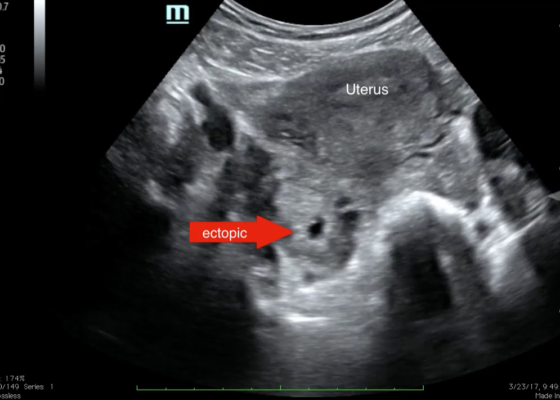
Point-of-care Ultrasound for the Diagnosis of Ectopic Pregnancy
DOI: https://doi.org/10.21980/J8VK7VThe transabdominal pelvic ultrasound shows an empty uterus (annotated) with free fluid and a right sided extrauterine gestational sac representing an ectopic pregnancy (red arrow).