JETem
  • Home
  • About
    • Aim and Scope
    • Our Team
    • Editorial Board
    • FAQ
  • Issues
    • Current Issue
    • Ahead of Print
    • Past Issues
  • Visual EM
    • Latest Visual EM
    • Search Visual EM
    • Thumbnail Library
  • For Authors
    • Instructions for Authors
    • Submit to JETem
    • Photo Consent
    • Policies
      • Peer Review Policy
      • Copyright Policy
      • Editorial Policy, Ethics and Responsibilities
      • Conflicts of Interest & Informed Consent
      • Open Access Policy
  • For Reviewers
    • Instructions for JETem Reviewers
    • Interested in Being a JETem Reviewer?
  • Topic
    • Abdominal / Gastroenterology
    • Administration
    • Board Review
    • Cardiology / Vascular
    • Certifying Exam Cases
      • Clinical Decision-Making
      • Prioritization
      • Communication
      • Procedure & Ultrasound
    • Clinical Informatics, Telehealth and Technology
    • Dermatology
    • EMS
    • Endocrine
    • ENT
    • Faculty Development
    • Genitourinary
    • Geriatrics
    • Hematology / Oncology
    • Infectious Disease
    • Miscellaneous
    • Neurology
    • Ob / Gyn
    • Ophthalmology
    • Orthopedics
    • Pediatrics
    • Pharmacology
    • Procedures
    • Psychiatry
    • Renal / Electrolytes
    • Respiratory
    • Social Determinants of Health
    • Toxicology
    • Trauma
    • Ultrasound
    • Urology
    • Wellness
    • Wilderness
  • Modality
    • Certifying Exam Practice Cases
      • Clinical Care Cases
      • Communication & Procedural Cases
      • Old School Oral Board Cases
    • Curricula
    • Innovations
    • Lectures
    • Podcasts
    • Simulation
    • Small Group Learning
    • Team Based Learning
    • Visual EM
  • Contact Us

Posts by JETem

Creative Commons images

Osborn Waves

James Elliot Karz, DO*, Grant Wei, MD* and Chirag Shah, MD*

DOI: https://doi.org/10.21980/J8G34G Issue 3:2[mrp_rating_result]
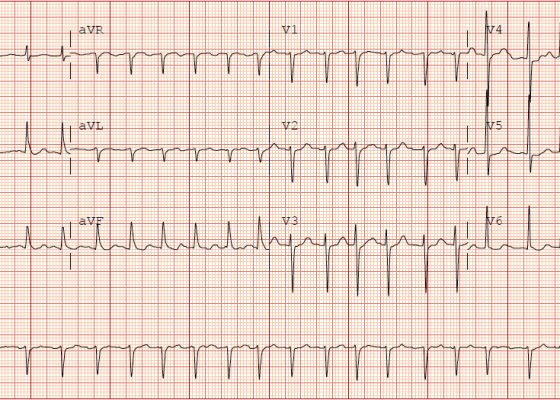
The initial ECG shows a junctional rhythm with Osborn waves (or J point elevations/J waves) in the lateral precordial leads, as well as the limb leads (Image 1). The second ECG, 49 minutes later, shows an improving ventricular rate and Osborn wave height decrease of approximately 50% (Image 2). 
Cardiology/VascularVisual EM
Creative Commons images

Rare Rapidly Growing Thumb Lesion in a 12-Year-Old Male

Alana J Arnold, MD, MBA*

DOI: https://doi.org/10.21980/J8B92J Issue 3:2[mrp_rating_result]
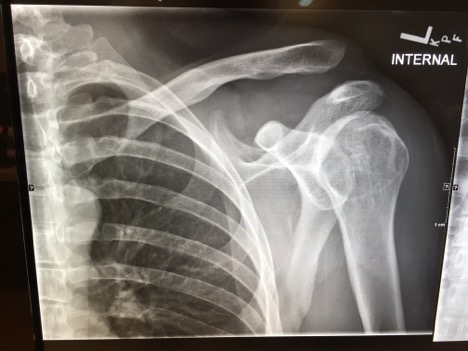
History of present illness: A 12-year-old male presented to the emergency department with right thumb pain and a mass for four months (see images). He denied fevers, chills, change in appetite, or fatigue. He noted that the lesion was growing and “bleeds easily if bumped.” He denied any trauma to the thumb, except “hitting it” months ago while in football
Hematology/OncologyOrthopedicsVisual EM
Creative Commons images

Large Ventral Hernia

Meryl Abrams, MD*, Raymond Feuga, MD*, Nicholas Governatori, MD* and Jennifer White, MD*

DOI: https://doi.org/10.21980/J86K9QIssue 3:2[mrp_rating_result]
Computed tomography (CT) scan with intravenous (IV) contrast of the abdomen and pelvis demonstrated a large pannus containing a ventral hernia with abdominal contents extending below the knees (white circle), elongation of mesenteric vessels to accommodate abdominal contents outside of the abdomen (white arrow) and air fluid levels (white arrow) indicating a small bowel obstruction.
Abdominal/GastroenterologyVisual EM
Creative Commons images

Elderly female with acute abdominal pain presenting with Superior Mesenteric Artery Thrombus

Sassan Ghassemzadeh, MD*

DOI: https://doi.org/10.21980/J82W52 Issue 3:2[mrp_rating_result]
Computed tomography (CT) angiogram of the abdomen and pelvis revealed a superior mesenteric artery (SMA) thrombosis 5 cm from the origin off of the abdominal aorta. As seen in the sagittal view, there does not appear to be any contrast 5 cm past the origin of the SMA. On the axial views, you can trace the SMA until the point that there is no longer any contrast visible which indicates the start of the thrombus.  The SMA does not appear to be reconstituted. There was normal flow to the celiac artery. (See annotated images).
Abdominal/GastroenterologyCardiology/VascularVisual EM

An OSCE Evaluation Tool for the Assessment of Emergency Medicine Resident Progression Performance of ACGME Patient Case and Interpersonal Communication Milestones

Miriam Kulkarni, MD*, Tiffany Murano, MD*, Harsh Sule, MD^, Jill Ripper, MD^ and Gregory Suglaski, MD^

DOI: https://doi.org/10.21980/J8J63RIssue 3:1[mrp_rating_result]
Our goal was to create a standardized OSCE based formative assessment tool that could be deployed with minimal resource utilization. The purpose of our tool is to provide data regarding Emergency Medicine Residents’ performance in ACGME patient care milestones as they progress longitudinally through their residency.
CurriculaMiscellaneous (stats, etc)
Creative Commons images

A Model Curriculum for an Emergency Medical Services (EMS) Rotation for Emergency Medicine Residents

Michael Mancera, MD*, Aaron Kraut, MD*, Megan Gussick, MD* and Michael Lohmeier, MD*

DOI: https://doi.org/10.21980/J8DD0FIssue 3:1[mrp_rating_result]
The aim of this curriculum is to provide a robust learning experience for EM residents around prehospital care and EMS that fulfills the ACGME requirements and which can be easily replicated and implemented in a variety of EM residency training programs.
EMSCurriculaSmall Group Learning

Hosting an eConference: Interactive video conference grand rounds between two institutions

Jeffrey Rixe, MD*, Kiersten Carter, MD^, Alexander Y Sheng, MD*, Jordan Spector, MD*, Katie Doering, MD^, Jeffrey Chien, MD^ and Nikita Joshi, MD^

DOI: https://doi.org/10.21980/J88P80Issue 3:1[mrp_rating_result]
Our objectives were to create and implement a novel virtual conference format through the integration of social media tools which allows for interdisciplinary and multi-site participation to enhance EM resident education. We wish to outline the steps required to reproduce this innovative session and share lessons learned.
InnovationsLectures

A Brief Didactic Intervention to Improve Multiple-Choice Item-Writing Quality

Jonathan S Jones, MD*, Andrew W Phillips, MD, MEd^, Andrew M King, MD†, Molly K Estes, MD**, Lauren W Conlon, MD^^ and Kevin R Scott, MD, MSEd^^

DOI: https://doi.org/10.21980/J81633Issue 3:1[mrp_rating_result]
The primary objective of this training module is to provide emergency medicine residents and faculty the basic knowledge necessary to write high quality structured single-best answer examination items through a brief, independent study format.
LecturesFaculty Development
«‹59›»
Page 59 of 85

JETem is an online, open access, peer-reviewed, journal-repository for EM educators. We are PMC Indexed.

Most Viewed

  • Simulation-Based Preparation for the American Board of Emergency Medicine Certifying Exam: A Comprehensive Curriculum for Residents
  • Difficult Conversation Case: Missed Testicular Cancer
  • Difficult Conversation Case: Death Notification
  • Managing Conflict Case: Admission of a Patient with Decompensated Schizophrenia, Hypertension, and Diabetes
  • Managing Conflict Case: The Difficult Consultant

Visit Our Collaborators


Creative Commons Licence
This work is licensed under a Creative Commons Attribution 4.0 International License.

About

Education

Learners should benefit from active learning. JETem accepts submissions of team-based learning, small group learning, simulation, podcasts, lectures, innovations, curricula, question sets, and visualEM.

Scholarship

We believe educators should advance through the scholarship of their educational work. JETem gives educators the opportunity to publish scholarly academic work so that it may be widely distributed, thereby increasing the significance of their results.

Links

  • Home
  • Aim and Scope
  • Current Issue
  • For Reviewers
  • Instructions for Authors
  • Contact Us

Newsletter

Sign up to receive updates from JETem regarding newly published issues and findings.

Copyright Creative Commons Attribution 4.0 International