JETem
  • Home
  • About
    • Aim and Scope
    • Our Team
    • Editorial Board
    • FAQ
  • Issues
    • Current Issue
    • Ahead of Print
    • Past Issues
  • Visual EM
    • Latest Visual EM
    • Search Visual EM
    • Thumbnail Library
  • For Authors
    • Instructions for Authors
    • Submit to JETem
    • Photo Consent
    • Policies
      • Peer Review Policy
      • Copyright Policy
      • Editorial Policy, Ethics and Responsibilities
      • Conflicts of Interest & Informed Consent
      • Open Access Policy
      • Acceptance Fee
  • For Reviewers
    • Instructions for JETem Reviewers
    • Interested in Being a JETem Reviewer?
  • Topic
    • Abdominal/Gastroenterology
    • Administration
    • Board Review
    • Cardiology/Vascular
    • Certifying Exam Cases
      • Clinical Decision-Making
      • Prioritization
      • Communication
      • Procedure & Ultrasound
    • Clinical Informatics, Telehealth and Technology
    • Dermatology
    • EMS
    • Endocrine
    • ENT
    • Faculty Development
    • Genitourinary
    • Geriatrics
    • Hematology/Oncology
    • Infectious Disease
    • Miscellaneous (stats, etc)
    • Neurology
    • Ob/Gyn
    • Ophthalmology
    • Orthopedics
    • Pediatrics
    • Pharmacology
    • Procedures
    • Psychiatry
    • Renal/Electrolytes/Nutrition
    • Respiratory
    • Social Determinants of Health
    • Toxicology
    • Trauma
    • Ultrasound
    • Urology
    • Wellness
    • Wilderness
  • Modality
    • Certifying Exam Practice Cases
      • Clinical Care Cases
      • Communication & Procedural Cases
      • Old School Oral Board Cases
    • Curricula
    • Innovations
    • Lectures
    • Podcasts
    • Simulation
    • Small Group Learning
    • Team Based Learning (TBL)
    • Visual EM
  • Contact Us

Posts by JETem

The Toxiscape Hunt: An Escape Room-Scavenger Hunt for Toxicology Education

Megan Boysen-Osborn, MD, MHPE*, Sara Paradise, MD* and Jeffrey R Suchard, MD, FACMT*

DOI: https://doi.org/10.21980/J8NW58 Issue 3:1[mrp_rating_result]
By the end of the activity, learners should be able to: 1) Calculate an anion and osmolal gap. 2) Recognize poisonings amenable to hemodialysis. 3) Interpret EKG changes related to a variety of ingestions, including beta-blockers and calcium channel blockers, digitalis, and tricyclic antidepressants. 4) Recognize poisonous plants and their clinical toxidromes. 5) Calculate loading dose of N-acetylcysteine as antidote for acute acetaminophen ingestion. 6) Collaborate as a team to arrive at solutions of problems. 7) Recognize poisons that have available antidotes 8) Know the clinical effect of various types of snake envenomations. 9) Recognize the toxicity associated with at least four household chemicals. 10) Know the antidotes for six common poisonings.
ToxicologySmall Group Learning

Severe Sepsis Manifesting as A-Fib with Rapid Ventricular Rate

Paul Nicholson, MD* and Jennifer Yee, DO*

DOI: https://doi.org/10.21980/J8WG9W Issue 3:1[mrp_rating_result]
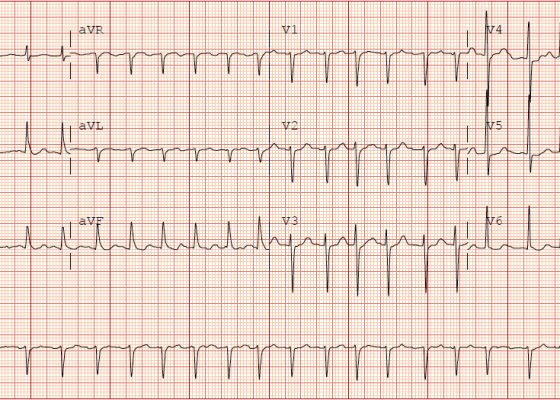
By the end of this simulation session, the learner will be able to: 1) Recognize severe sepsis (please note – Centers for Medicare and Medicaid Services (CMS) Sepsis-I and II definitions are used throughout the case, as Sepsis-III has not been adopted by any emergency medicine organizations), 2) recognize atrial fibrillation, 3) review the importance of a thorough history and physical exam, 4) discuss the sepsis spectrum, 5) discuss the acute management of severe sepsis, 6) discuss common and uncommon sources of sepsis, 7) discuss appropriate empiric antibiotic options, 8) discuss common causes of newly-diagnosed atrial fibrillation, 9) review the different emergency medicine-based treatment modalities for uncomplicated atrial fibrillation, specifically atrial fibrillation with rapid ventricular rate.
Infectious DiseaseSimulation
Creative Commons images

Biceps Tendon Rupture

Daniel M Polvino, MD* and Grant Wei, MD*

DOI: https://doi.org/10.21980/J8RP8B Issue 3:1[mrp_rating_result]
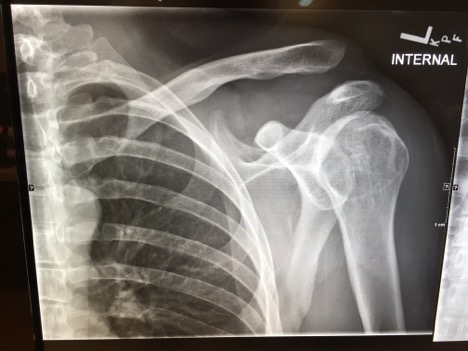
Physical exam was significant for ecchymosis and mild swelling of the right bicep. When the right arm was flexed at the elbow, a prominent mass was visible and palpable over the right bicep. Right upper extremity strength was 4/5 with flexion at the elbow.
OrthopedicsVisual EM
Creative Commons images

Hutchinson’s Sign

Lawrence Lau, MD*, Hannah Mirzakhani, BA^ and Nicholas Governatori, MD*

DOI: https://doi.org/10.21980/J8N040 Issue 3:1[mrp_rating_result]
The unilateral distribution of vesicular lesions over the patient's left naris, cheek, and upper lip are consistent with Herpes zoster reactivation with Hutchinson's sign.  Hutchinson's sign is a herpes zoster vesicle present on the tip or side of the nose.1 It reflects zoster involvement of the 1st branch of the trigeminal nerve, and is concerning for herpes zoster ophthalmicus.1 Herpes zoster vesicles may present as papular lesions or macular vesicles on an erythematous base.2,3 Emergent diagnosis must be made to prevent long-term visual sequelae.4
Infectious DiseaseDermatologyVisual EM
Creative Commons images

Viridans streptococci Intracranial Abscess Masquerading as Metastatic Disease

Brandon Ruderman, MD*, Traci Thoureen, MD* and Joshua Broder, MD*

DOI: https://doi.org/10.21980/J8CH05 Issue 3:1[mrp_rating_result]
A non-contrast CT (Figure 1) revealed a large hypoattenuating left parietal lesion. When the CT was enhanced with intravenous contrast (Figure 2), the same lesion showed peripheral rim enhancement, suggestive of a brain abscess.
Infectious DiseaseNeurologyVisual EM
Creative Commons images

A Sublingual Mass in a 5-Year-Old Male

Chris A Rees MD, MPH*, Andrea T Cruz, MD, MPH^ and Corrie E Chumpitazi, MD, MS^

DOI: https://doi.org/10.21980/J8H622Issue 3:1[mrp_rating_result]
Oral ranula. On oral inspection he had a 3 x 1.5 cm, soft, non-tender, mobile, cystic, sublingual mass on the right aspect of the floor of his mouth that did not move with swallowing (Image 1). There was mild associated submandibular swelling on the right side of his face.
ENTVisual EM
Creative Commons images

Pneumomediastinum After Cervical Stab Wound

Chad Correa, BS* and Emily Ma, MD^

DOI: https://doi.org/10.21980/J87P79 Issue 3:1[mrp_rating_result]
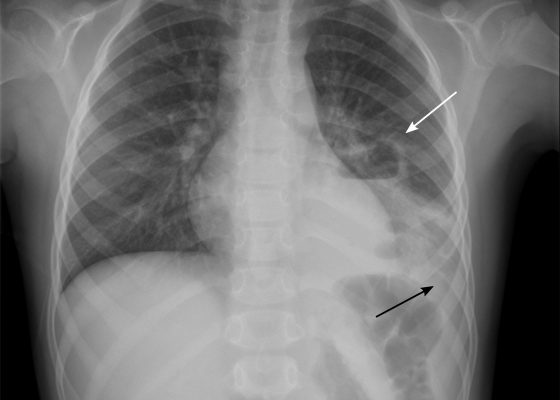
Anteroposterior (AP) chest X-ray showed subcutaneous emphysema of the neck, surrounding the trachea (red arrows), right side greater than left, and a streak of gas adjacent to the aortic arch (white arrow). Computed tomography angiogram (CTA) of the neck showed air outside of the trachea, positive for pneumomediastinum (blue arrows). 
TraumaRespiratoryVisual EM
Creative Commons images

A Case of Acute Cholecystitis

Chad Correa, BS* and Lindsey Spiegelman, MD^

DOI: https://doi.org/10.21980/J8405QIssue 3:1[mrp_rating_result]
Bedside point-of-care ultrasound revealed a distended gallbladder, thickened gallbladder wall, pericholecystic fluid, and a stone in the neck of the gallbladder indicative of acute cholecystitis.
Abdominal/GastroenterologyVisual EM
«‹64›»
Page 64 of 89

JETem is an online, open access, peer-reviewed, journal-repository for EM educators. We are PMC Indexed.

Most Viewed

  • Escape Intern Orientation! — A Capstone and Team Building Activity for New EM Interns
  • Enhancing Relationship-Centered Communication and Feedback in Emergency Medicine Through Applied Improvisation (EM-PROV)
  • Postpartum Complications Modified TBL
  • Midline Catheters: A Novel Curriculum for Emergency Medicine Residents
  • Stopping Fistula Hemorrhage without Bleeding Time and Money – A Low Cost, Low Resource Hemodialysis Fistula Model for Emergency Medicine Residents

Visit Our Collaborators


Creative Commons Licence
This work is licensed under a Creative Commons Attribution 4.0 International License.

About

Education

Learners should benefit from active learning. JETem accepts submissions of team-based learning, small group learning, simulation, podcasts, lectures, innovations, curricula, question sets, and visualEM.

Scholarship

We believe educators should advance through the scholarship of their educational work. JETem gives educators the opportunity to publish scholarly academic work so that it may be widely distributed, thereby increasing the significance of their results.

Links

  • Home
  • Aim and Scope
  • Current Issue
  • For Reviewers
  • Instructions for Authors
  • Contact Us

Newsletter

Sign up to receive updates from JETem regarding newly published issues and findings.

Copyright Creative Commons Attribution 4.0 International