
Latest Articles

Fainting Spells
DOI: https://doi.org/10.21980/J8Z91RABSTRACT: Audience: The target audience for this simulation is 4th year medical students, emergency medicine residents, pediatric residents, and family medicine residents. Introduction: Brugada syndrome is defined as the combination of specific electrocardiogram (ECG) changes and clinical manifestations of a ventricular arrhythmia, including syncope and sudden cardiac arrest.1 Brugada syndrome is caused by a mutation in the phase-0 cardiac sodium channel. This
Guillain-Barrè
DOI: https://doi.org/10.21980/J8TH06At the conclusion of the simulation session, learners will be able to: 1) Recognize the clinical signs and symptoms associated with Guillain-Barré syndrome, including muscle weakness and hyporeflexia. 2) Identify abnormal vital signs secondary to dysautonomia. 3) Discuss evaluation for impending respiratory failure, including bedside pulmonary function testing. 4) Discuss the management of Guillain-Barré, including management of dysautonomia and respiratory failure, as well as definitive management with plasmapheresis versus intravenous immunoglobulin. 5) Appropriately disposition the patient to the intensive care unit. 6) Effectively communicate with team members and nursing staff during resuscitation of a critically ill patient
Sepsis Secondary to an Abdominal Wound Infection
DOI: https://doi.org/10.21980/J8PS60At completion of this case learners should be able to: 1) Recognize and differentiate between systemic inflammatory response syndrome, sepsis, severe sepsis, and septic shock. 2) Prepare an appropriate differential diagnosis for a patient with sepsis. 3) Demonstrate appropriate fluid resuscitation and antibiotic therapy for a septic patient. 4) Demonstrate appropriate vasopressor therapy for a septic patient. 5) Understand and apply the Surviving Sepsis Guidelines.
Chest Pain with Acute Coronary Syndrome
DOI: https://doi.org/10.21980/J8K04CAt the end of this case learners should be able to prepare a differential for patients with chest pain, provide appropriate medications for a patient with chest pain, recognize an ST segment elevation MI, and appropriately disposition a patient with acute myocardial infarction (AMI).

An Unusual Case of Pharyngitis: Herpes Zoster of Cranial Nerves 9, 10, C2, C3 Mimicking a Tumor
DOI: https://doi.org/10.21980/J8B05KOn exam, the patient was sitting upright while holding an emesis basin filled with saliva. His voice was noticeably hoarse. Examination of the head and neck revealed vesicular eruptions on the left scalp in the V1 dermatome and on the left mastoid process (Images 1 and 2). Physical exam also shows vesicular eruptions on the left posterior oropharynx that did not cross midline (Image 3).

Ramsay Hunt Syndrome
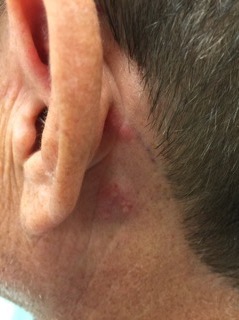
DOI: https://doi.org/10.21980/J85S7QLeft-sided cranial nerve VII palsy with flattened forehead creases, inability to keep the left eye open, and drooping of the corner of mouth. Vesicular lesions were found in and posterior to the left ear in a unilateral, dermatomal distribution.
Retinal Detachment
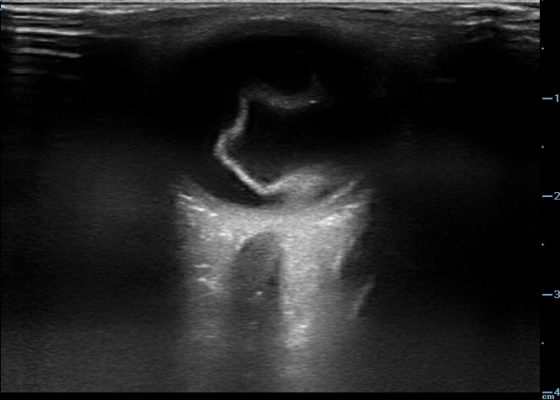
DOI: https://doi.org/10.21980/J8204QBedside ocular ultrasound revealed a serpentine, hyperechoic membrane that appeared tethered to the optic disc posteriorly with hyperechoic material underneath. These findings are consistent with retinal detachment (RD) and associated retinal hemorrhage.

Necrotizing Soft Tissue Infection
DOI: https://doi.org/10.21980/J8X92TComputed tomography (CT) of the abdominal and pelvis with intravenous (IV) contrast revealed inflammatory changes, including gas and fluid collections within the ventral abdominal wall extending to the vulva, consistent with a necrotizing soft tissue infection.

Spontaneous Pneumomediastinum: Hamman Syndrome
DOI: https://doi.org/10.21980/J8NS72The initial CT scans showed extraluminal gas surrounding the distal esophagus as it traversed the posterior mediastinum, concerning for possible distal esophageal perforation that prompted surgery and GI consultations. There was no evidence of a drainable collection or significant fat stranding. The image also showed an intraluminal stent traversing the gastric antrum and gastric pylorus with no indication of obstruction. Circumferential mural thickening of the gastric antrum and body were consistent with the patient’s history of gastric adenocarcinoma. The shotty perigastric lymph nodes with associated fat stranding, along the greater curvature of the distal gastric body suggested local regional nodal metastases and possible peritoneal carcinomatosis.
The thoracic CT scans showed extensive pneumomediastinum that tracked into the soft tissues of the neck, which given the history of vomiting also raised concern for esophageal perforation. There was still no evidence of mediastinal abscess or fat stranding. Additionally, a left subclavian vein port catheter, which terminates with tip at the cavoatrial junction of the superior vena cava can also be seen on the image.

Intussusception
DOI: https://doi.org/10.21980/J8SH0WA segment of bowel within the right abdomen that measured approximately 1.6 x 1.5 cm transaxially. It demonstrated a hypoechoic edematous outer loop of bowel (blue arrow) and hyperechoic compressed loop of bowel telescoping within (red star), this is known as the "target sign."