
Latest Articles

Croup
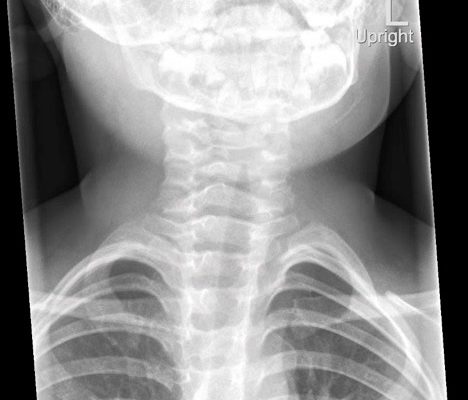
DOI: https://doi.org/10.21980/J8W05JThe anteroposterior X-ray reveals the classic steeple sign (blue outline) indicative of subglottic edema leading to tracheal narrowing, consistent with croup. The lateral x-ray shows narrowing of the subglottic region (green outline and arrows).
Various Degrees of Thermal Burns
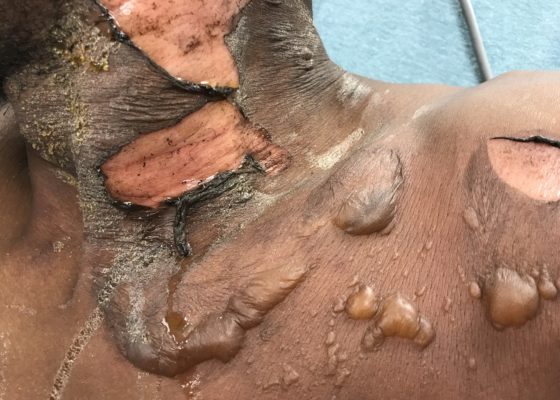
DOI: https://doi.org/10.21980/J8R91WOn exam,there is a large swath of skin with evidence of thermal injury involving the neck, shoulder, chest, and face, including damage to the ear, external nostril, and lips. Burns exhibit varying degrees of severity and total approximately 4.5% of the body surface area. Several areas are charred and insensate to pinprick. The left earlobe is partially burned off. Patient's airway is patent with no evidence of thermal injury or obstruction to the oropharynx or nasal vestibule.

Pemphigoid Gestationis
DOI: https://doi.org/10.21980/J8MG9DPhysical exam findings were significant for 1-3 cm diameter well-demarcated superficial ulcers on the patient’s abdomen and extremities, with mucosal sparing. Several small tense bullae were present on the bilateral inner thighs and numerous small reddish plaques were scattered over the patient’s back. Nikolsky’s sign was negative. No lymphadenopathy was noted.

Don’t Forget the Pacemaker – A Rare Complication
DOI: https://doi.org/10.21980/J8GS7HThe ECG demonstrated the presence of pacemaker spikes without appropriate capture (green arrows) and a ventricular escape rhythm which can be identified by an absence of P waves prior to the QRS complex (purple arrows). The portable chest X- demonstrated displaced pacemaker leads (red arrows) that were coiled around the pulse generator (blue arrow).

Novel Emergency Medicine Curriculum Utilizing Self-Directed Learning and the Flipped Classroom Method: Cardiovascular Emergencies Small Group Module
DOI: https://doi.org/10.21980/J8X334We aim to teach the presentation and management of cardiovascular emergencies through the creation of a flipped classroom design. This unique, innovative curriculum utilizes resources chosen by education faculty and resident learners, study questions, real-life experiences, and small group discussions in place of traditional lectures. In doing so, a goal of the curriculum is to encourage self-directed learning, improve understanding and knowledge retention, and improve the educational experience of our residents.

The Continuous Residency Improvement Committee (CRIC) – A Novel Twist for Program Evaluation in an Academic Emergency Medicine Residency Program
DOI: https://doi.org/10.21980/J8SD17The purpose of this innovation was to develop a novel approach to continuous program evaluation and improvement using a multisource feedback design to improve resident satisfaction with the program’s responsiveness to feedback while addressing the ACGME mandate for self-study.
Realistic and Inexpensive Ultrasound Guided Paracentesis Simulator Using Pork Belly with Skin
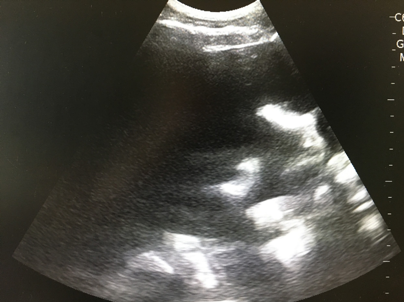
DOI: https://doi.org/10.21980/J8NK9RBy the end of this instructional session learners should be able to: 1) Discuss the indications, contraindications, and complications associated with abdominal paracentesis; and 2) competently perform an ultrasound-guided abdominal paracentesis on a simulator and remove fluid.

Low Cost Task Trainer for Neonatal Umbilical Catheterization
DOI: https://doi.org/10.21980/J8HW6GBy the end of this instructional session learners should: 1) Discuss the indications, contraindications, and complications associated with umbilical catheterization. 2) Competently perform umbilical catheterization on the task trainer. 3) Demonstrate proper securement of the catheter.

A Low Cost Escharotomy Simulation Model for Residency Education
DOI: https://doi.org/10.21980/J8D34VBy the end of this educational session, the learner will be able to: 1) Understand the indications for an escharotomy. 2) List equipment needed to perform an escharotomy. 3) Demonstrate how to perform an escharotomy. 4) Perform an escharotomy and experience the sensation of cutting through simulated burned tissue. 5) Understand post-escharotomy management and referral to specialist.


Acute Hemolytic Transfusion Reaction
DOI: https://doi.org/10.21980/J88D2ZBy the end of this simulation session, the learner will be able to: 1) Recognize the clinical signs and symptoms associated with transfusion reactions. 2) Discuss necessary systems-based management of potential transfusion reactions, such as notifying the blood bank and evaluating to see if another patienta accidentally received a wrong unit of blood. 3) Discuss the management of various transfusion reactions. 4) Appropriately disposition the patient to an intensive care unit (ICU) or stepdown unit. 5) Effectively communicate with team members and nursing staff during the resuscitation of a critically ill patient.