
JETem
  • Home
  • About
    • Aim and Scope
    • Our Team
    • Editorial Board
    • FAQ
  • Issues
    • Current Issue
    • Ahead of Print
    • Past Issues
  • Visual EM
    • Latest Visual EM
    • Search Visual EM
    • Thumbnail Library
  • For Authors
    • Instructions for Authors
    • Submit to JETem
    • Photo Consent
    • Policies
      • Peer Review Policy
      • Copyright Policy
      • Editorial Policy, Ethics and Responsibilities
      • Conflicts of Interest & Informed Consent
      • Open Access Policy
  • For Reviewers
    • Instructions for JETem Reviewers
    • Interested in Being a JETem Reviewer?
  • Topic
    • Abdominal/Gastroenterology
    • Administration
    • Board Review
    • Cardiology/Vascular
    • Certifying Exam Cases
      • Clinical Decision-Making
      • Prioritization
      • Communication
      • Procedure & Ultrasound
    • Clinical Informatics, Telehealth and Technology
    • Dermatology
    • EMS
    • Endocrine
    • ENT
    • Faculty Development
    • Genitourinary
    • Geriatrics
    • Hematology/Oncology
    • Infectious Disease
    • Miscellaneous (stats, etc)
    • Neurology
    • Ob/Gyn
    • Ophthalmology
    • Orthopedics
    • Pediatrics
    • Pharmacology
    • Procedures
    • Psychiatry
    • Renal/Electrolytes
    • Respiratory
    • Social Determinants of Health
    • Toxicology
    • Trauma
    • Ultrasound
    • Urology
    • Wellness
    • Wilderness
  • Modality
    • Certifying Exam Practice Cases
      • Clinical Care Cases
      • Communication & Procedural Cases
      • Old School Oral Board Cases
    • Curricula
    • Innovations
    • Lectures
    • Podcasts
    • Simulation
    • Small Group Learning
    • Team Based Learning (TBL)
    • Visual EM
  • Contact Us

Neurology

Bell’s Palsy

Patrick G Meloy, MD*, Todd A Taylor, MD*, Chris Dudley, MD* and Michelle D Lall, MD*

DOI: https://doi.org/10.21980/J89G9M Issue 3:2[mrp_rating_result]
At the end of this oral boards session, examinees will: 1) Demonstrate ability to perform a thorough neurologic examination including full cranial nerve exam, National Institutes of Health (NIH) stroke scale assessment, strength and sensation and reflex testing, pronator drift, speech repetition. 2) Differentiate between Bell’s Palsy and acute stroke with facial paralysis. 3) List appropriate laboratory testing for a case of peripheral facial nerve paralysis (basic metabolic panel [BMP]; complete blood count [CBC]; coagulation studies if considering lumbar puncture; human immunodeficiency virus (HIV) test if high-risk by history, or if bilateral; Lyme titer if in endemic area, or if bilateral). 4) Select appropriate treatments (steroids, eye lubricant and patch, PCP referral) for peripheral facial nerve paralysis.
NeurologyCertifying Exam Cases

Guillain-Barrè

Jennifer Yee, DO*, Andrew M King MD* and Geremiha Emerson, MD*

DOI: https://doi.org/10.21980/J8TH06 Issue 3:2[mrp_rating_result]
At the conclusion of the simulation session, learners will be able to: 1) Recognize the clinical signs and symptoms associated with Guillain-Barré syndrome, including muscle weakness and hyporeflexia. 2) Identify abnormal vital signs secondary to dysautonomia. 3) Discuss evaluation for impending respiratory failure, including bedside pulmonary function testing. 4) Discuss the management of Guillain-Barré, including management of dysautonomia and respiratory failure, as well as definitive management with plasmapheresis versus intravenous immunoglobulin. 5) Appropriately disposition the patient to the intensive care unit. 6) Effectively communicate with team members and nursing staff during resuscitation of a critically ill patient
NeurologySimulation
Creative Commons images

Radial Nerve Palsy

Richard Barnett, DO* and Amy Church, MD*

DOI: https://doi.org/10.21980/J8KS7F Issue 3:2[mrp_rating_result]
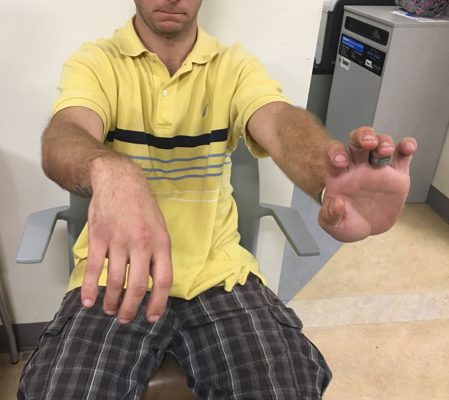
On physical exam, the patient was unable to extend his right wrist, thumb, and fingers, and had no sensation of his 1stdorsal interosseous muscles up to the proximal dorsal radial aspect of his forearm. The patient also had slight weakness in thumb abduction. Triceps strength was preserved.
NeurologyVisual EM
Creative Commons images

Viridans streptococci Intracranial Abscess Masquerading as Metastatic Disease

Brandon Ruderman, MD*, Traci Thoureen, MD* and Joshua Broder, MD*

DOI: https://doi.org/10.21980/J8CH05 Issue 3:1[mrp_rating_result]
A non-contrast CT (Figure 1) revealed a large hypoattenuating left parietal lesion. When the CT was enhanced with intravenous contrast (Figure 2), the same lesion showed peripheral rim enhancement, suggestive of a brain abscess.
Infectious DiseaseNeurologyVisual EM
Creative Commons images

Dense MCA Sign

Richard J Chen, MD* and Grant Wei, MD*

DOI: https://doi.org/10.21980/J8CS66Issue 2:3[mrp_rating_result]
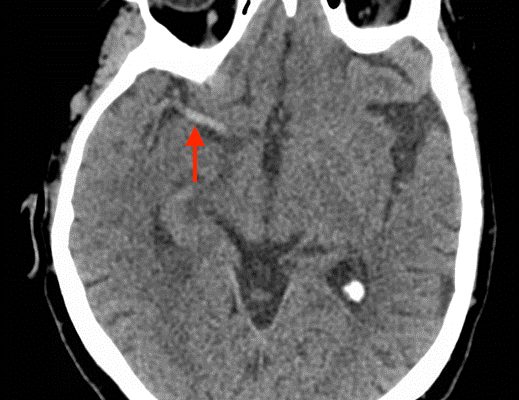
A non-contrast computed tomography (CT) scan showed a hyperdensity along the right middle cerebral artery (MCA) consistent with acute thrombus. The red arrow highlights the hyperdensity in the annotated image.
NeurologyVisual EM

Status Epilepticus in the Emergency Department

Jonathan Lee, BS* and Alisa Wray, MD*

DOI: https://doi.org/10.21980/J8RC7VIssue 2:2[mrp_rating_result]
At the end of this simulation session, the learner will: 1) Demonstrate the management of status epilepticus 2) Justify when airway intervention is needed for status epilepticus 3) Describe risk factors for status epilepticus 4) Prepare a differential diagnosis for the causes in status epilepticus.
NeurologySimulation
Creative Commons images

Presentation of Significant Subarachnoid Hemorrhage without Loss of Consciousness

Nicholas Taylor, BA* and Shannon Toohey, MD, MAEd*

DOI: https://doi.org/10.21980/J80W29 Issue 2:2[mrp_rating_result]
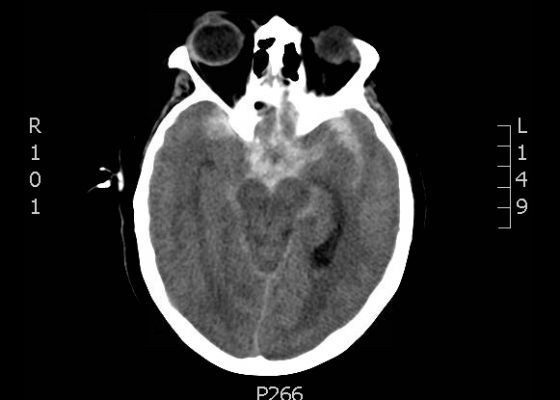
A non-contrast head CT demonstrated extensive subarachnoid hemorrhage occupying both cerebral convexities, the anterior interhemispheric fissure, the sylvian fissures, and the basal cisterns. Later CTA would show an 8 mm by 7 mm by 8mm MCA aneurysm near the M1/M2 junction and two pericallosal artery aneurysms, 7 by 6 mm and 8 by 5 mm respectively.
NeurologyVisual EM
Creative Commons images

Acute Subdural Hematoma

Ellen Lester, BS*, Jonathan Peña, MD* and Warren Wiechmann, MD, MBA*

DOI: https://doi.org/10.21980/J87C76 Issue 2:2[mrp_rating_result]
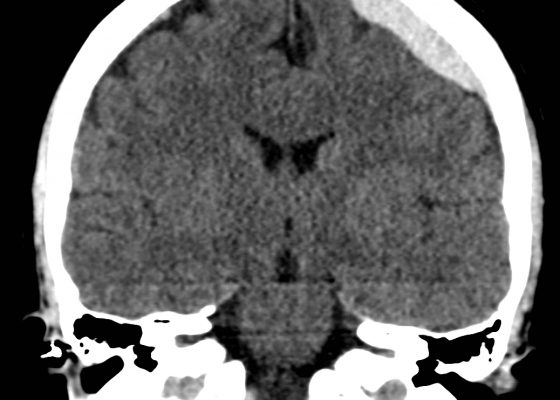
Non-contrast Computed Tomography (CT) of the Head showed a dense extra-axial collection along the left frontal and parietal regions, extending superior to the vertex with mild mass effect, but no midline shift.
NeurologyVisual EM
«‹5›
Page 5 of 6

JETem is an online, open access, peer-reviewed, journal-repository for EM educators. We are PMC Indexed.

Most Viewed

  • Enhancing Emergency Medicine Resident Education: A Weekly Education Series to Augment Electrocardiogram Education
  • Development and Design of a Pediatric Case-Based Virtual Escape Room on Acute Iron Toxicity
  • Pre-Clinical Case Competition to Assess Confidence in Responding to Select Out-Of-Hospital Medical Emergencies
  • Pediatric Difficult Airway Simulation Day
  • Cards Against Pulmonology

Visit Our Collaborators


Creative Commons Licence
This work is licensed under a Creative Commons Attribution 4.0 International License.

About

Education

Learners should benefit from active learning. JETem accepts submissions of team-based learning, small group learning, simulation, podcasts, lectures, innovations, curricula, question sets, and visualEM.

Scholarship

We believe educators should advance through the scholarship of their educational work. JETem gives educators the opportunity to publish scholarly academic work so that it may be widely distributed, thereby increasing the significance of their results.

Links

  • Home
  • Aim and Scope
  • Current Issue
  • For Reviewers
  • Instructions for Authors
  • Contact Us

Newsletter

Sign up to receive updates from JETem regarding newly published issues and findings.

Copyright Creative Commons Attribution 4.0 International