
JETem
  • Home
  • About
    • Aim and Scope
    • Our Team
    • Editorial Board
    • FAQ
  • Issues
    • Current Issue
    • Ahead of Print
    • Past Issues
  • Visual EM
    • Latest Visual EM
    • Search Visual EM
    • Thumbnail Library
  • For Authors
    • Instructions for Authors
    • Submit to JETem
    • Photo Consent
    • Policies
      • Peer Review Policy
      • Copyright Policy
      • Editorial Policy, Ethics and Responsibilities
      • Conflicts of Interest & Informed Consent
      • Open Access Policy
      • Acceptance Fee
  • For Reviewers
    • Instructions for JETem Reviewers
    • Interested in Being a JETem Reviewer?
  • Topic
    • Abdominal/Gastroenterology
    • Administration
    • Board Review
    • Cardiology/Vascular
    • Certifying Exam Cases
      • Clinical Decision-Making
      • Prioritization
      • Communication
      • Procedure & Ultrasound
    • Clinical Informatics, Telehealth and Technology
    • Dermatology
    • EMS
    • Endocrine
    • ENT
    • Faculty Development
    • Genitourinary
    • Geriatrics
    • Hematology/Oncology
    • Infectious Disease
    • Miscellaneous (stats, etc)
    • Neurology
    • Ob/Gyn
    • Ophthalmology
    • Orthopedics
    • Pediatrics
    • Pharmacology
    • Procedures
    • Psychiatry
    • Renal/Electrolytes/Nutrition
    • Respiratory
    • Social Determinants of Health
    • Toxicology
    • Trauma
    • Ultrasound
    • Urology
    • Wellness
    • Wilderness
  • Modality
    • Certifying Exam Practice Cases
      • Clinical Care Cases
      • Communication & Procedural Cases
      • Old School Oral Board Cases
    • Curricula
    • Innovations
    • Lectures
    • Podcasts
    • Simulation
    • Small Group Learning
    • Team Based Learning (TBL)
    • Visual EM
  • Contact Us

Infectious Disease

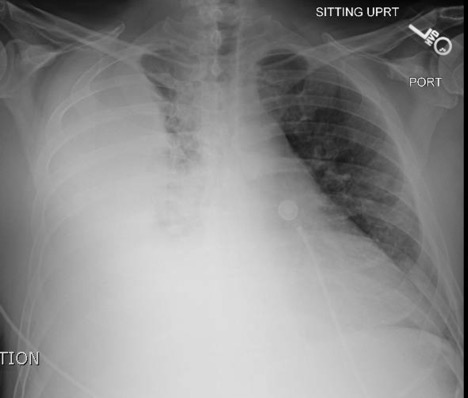
Pediatric Toxic Shock Syndrome

Jennifer Yee, DO* and Andrew King, MD*

DOI: https://doi.org/10.21980/J8WK8J Issue 2:4[mrp_rating_result]
By the end of this simulation session, the learner will be able to: 1) Recognize toxic shock syndrome. 2) Review the importance of a thorough physical exam. 3) Discuss management of toxic shock syndrome, including supportive care and the difference in antibiotic choices for streptococcal and staphylococcal toxic shock syndrome. 4) Appropriately disposition a patient suffering from toxic shock syndrome. 5) Communicate effectively with team members and nursing staff during a resuscitation of a critically ill patient.
Infectious DiseasePediatricsSimulation
Creative Commons images

Bedside Ultrasound for the Diagnosis of Peritonsillar Abscess

Harshal Bhakta, BS,* Maili Alvarado, MD^ and Daryn Towle, MD*

DOI: https://doi.org/10.21980/J8N33N Issue 2:4[mrp_rating_result]
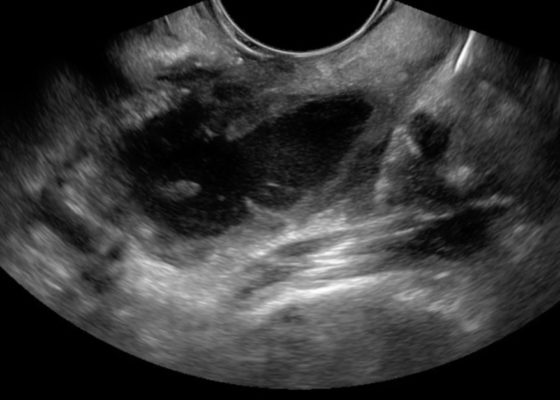
The first video is an intraoral ultrasound using the high frequency endocavitary probe demonstrating an anechoic fluid collection adjacent to the patient’s enlarged left tonsil. The second video shows real-time ultrasound-guided successful drainage of the PTA.
UltrasoundENTInfectious DiseaseVisual EM
Creative Commons images

Subcutaneous Emphysema in Non-Necrotizing Soft Tissue Injury

Hamid Ehsani-Nia, MS, DO* and Lauren Sylwanowicz MD ^

DOI: https://doi.org/10.21980/J8432M Issue 2:4[mrp_rating_result]
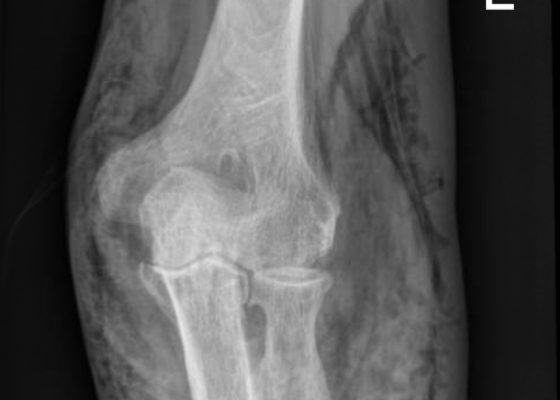
X-Rays of the elbow revealed diffuse striated lucencies throughout the soft tissue, consistent with extensive subcutaneous air throughout the superficial and deep tissues. There was no evidence of a fracture.
Infectious DiseaseOrthopedicsVisual EM
Creative Commons images

Erythema Migrans

Daniel Polvino, MD* and Grant Wei, MD*

DOI: https://doi.org/10.21980/J8QW7QIssue 2:4[mrp_rating_result]
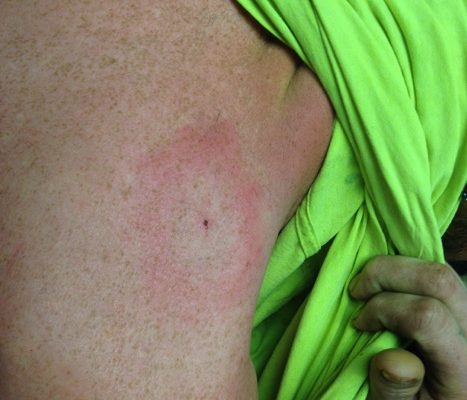
History of present illness: A 28-year-old male presented to the emergency department with a chief complaint of two weeks of headache, chills, and numbness in his hands. He reported removing a tick from his upper back approximately two weeks ago, but did not know how long the tick had been embedded. His review of symptoms was otherwise unremarkable. Significant findings:
DermatologyInfectious DiseaseVisual EM

Chancre of Primary Syphilis

Adnan Riaz MD* and Grant Wei MD*

DOI: https://doi.org/10.21980/J83342 Issue 2:4[mrp_rating_result]
Physical examination revealed a non-tender, erythematous lesion on the glans penis, two similar adjacent satellite lesions, as well as tender inguinal lymphadenopathy. No penile discharge was noted.
Infectious DiseaseDermatologyGenitourinaryVisual EM
Creative Commons images

Using Bedside Ultrasound to Rapidly Differentiate Shock

Mohamad Moussa, MD*, Jacob Willen, BS* and Sudipa Biswas, BS, MS*

DOI: https://doi.org/10.21980/J8S047 Issue 2:3[mrp_rating_result]
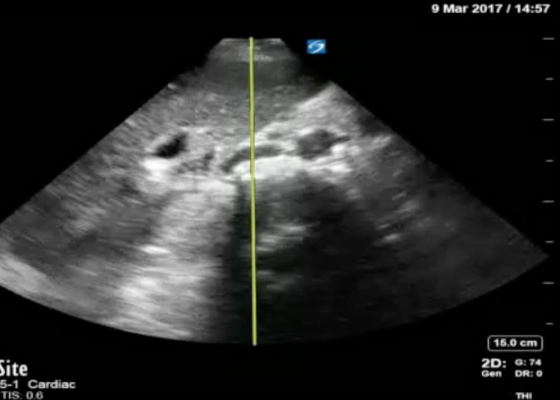
A RUSH exam demonstrated hyperdynamic cardiac contractility and collapse of the inferior vena cava (IVC) with probe compression more than 50% suggesting hypovolemia likely secondary to sepsis. Incidentally, Morrison’s pouch revealed a large right renal cyst but no signs of free fluid. A computed tomography of abdomen/pelvis showed a 10.8 x 9.5 cm right renal cyst and left lower lobe pneumonia.
UltrasoundInfectious DiseaseVisual EM

Pediatric Sepsis Case Scenario

Ilene Claudius, MD*, Sandra Montero, RN*, Madhu Hardasmalani, MD^, Kellyn Pak, RN* and Y. Liza Kearl, MD^

DOI: https://doi.org/10.21980/J8MK5XIssue 2:2[mrp_rating_result]
Pediatric sepsis is a low-frequency, high impact condition. Nurses and physicians do not see it often, but must recognize and treat children with sepsis efficiently when they present. This makes pediatric sepsis education particularly amenable to simulation scenarios.
PediatricsInfectious DiseaseSimulation
Creative Commons images

Acute Necrotizing Ulcerative Gingivitis (ANUG)

Nicholas E. Kman, MD* and Vinny P. Kumar, MD*

DOI: https://doi.org/10.21980/J8S88H Issue 2:2[mrp_rating_result]
Physical examination revealed inflamed gingiva, ulceration, and soft tissue necrosis (Image 1) along with mandibular lymphadenopathy (not shown). Given her symptoms, poor oral care, and her immunocompromised state, she was given a diagnosis of Acute Necrotizing Ulcerative Gingivitis (ANUG) or Vincent’s Angina.
ENTInfectious DiseaseVisual EM
«‹8›
Page 8 of 9

JETem is an online, open access, peer-reviewed, journal-repository for EM educators. We are PMC Indexed.

Most Viewed

  • Escape Intern Orientation! — A Capstone and Team Building Activity for New EM Interns
  • Enhancing Relationship-Centered Communication and Feedback in Emergency Medicine Through Applied Improvisation (EM-PROV)
  • Postpartum Complications Modified TBL
  • Midline Catheters: A Novel Curriculum for Emergency Medicine Residents
  • Stopping Fistula Hemorrhage without Bleeding Time and Money – A Low Cost, Low Resource Hemodialysis Fistula Model for Emergency Medicine Residents

Visit Our Collaborators


Creative Commons Licence
This work is licensed under a Creative Commons Attribution 4.0 International License.

About

Education

Learners should benefit from active learning. JETem accepts submissions of team-based learning, small group learning, simulation, podcasts, lectures, innovations, curricula, question sets, and visualEM.

Scholarship

We believe educators should advance through the scholarship of their educational work. JETem gives educators the opportunity to publish scholarly academic work so that it may be widely distributed, thereby increasing the significance of their results.

Links

  • Home
  • Aim and Scope
  • Current Issue
  • For Reviewers
  • Instructions for Authors
  • Contact Us

Newsletter

Sign up to receive updates from JETem regarding newly published issues and findings.

Copyright Creative Commons Attribution 4.0 International