
JETem
  • Home
  • About
    • Aim and Scope
    • Our Team
    • Editorial Board
    • FAQ
  • Issues
    • Current Issue
    • Ahead of Print
    • Past Issues
  • Visual EM
    • Latest Visual EM
    • Search Visual EM
    • Thumbnail Library
  • For Authors
    • Instructions for Authors
    • Submit to JETem
    • Photo Consent
    • Policies
      • Peer Review Policy
      • Copyright Policy
      • Editorial Policy, Ethics and Responsibilities
      • Conflicts of Interest & Informed Consent
      • Open Access Policy
  • For Reviewers
    • Instructions for JETem Reviewers
    • Interested in Being a JETem Reviewer?
  • Topic
    • Abdominal/Gastroenterology
    • Administration
    • Board Review
    • Cardiology/Vascular
    • Certifying Exam Cases
      • Clinical Decision-Making
      • Prioritization
      • Communication
      • Procedure & Ultrasound
    • Clinical Informatics, Telehealth and Technology
    • Dermatology
    • EMS
    • Endocrine
    • ENT
    • Faculty Development
    • Genitourinary
    • Geriatrics
    • Hematology/Oncology
    • Infectious Disease
    • Miscellaneous (stats, etc)
    • Neurology
    • Ob/Gyn
    • Ophthalmology
    • Orthopedics
    • Pediatrics
    • Pharmacology
    • Procedures
    • Psychiatry
    • Renal/Electrolytes
    • Respiratory
    • Social Determinants of Health
    • Toxicology
    • Trauma
    • Ultrasound
    • Urology
    • Wellness
    • Wilderness
  • Modality
    • Certifying Exam Practice Cases
      • Clinical Care Cases
      • Communication & Procedural Cases
      • Old School Oral Board Cases
    • Curricula
    • Innovations
    • Lectures
    • Podcasts
    • Simulation
    • Small Group Learning
    • Team Based Learning (TBL)
    • Visual EM
  • Contact Us

Procedures

Low-Cost Portable Suction-Assisted Laryngoscopy Airway Decontamination (SALAD) Simulator for Dynamic Emesis

Christopher Scott Sampson, MD*, Joseph D Pauly,* and Jordan D Horner, NRP*

DOI: https://doi.org/10.21980/J8362BIssue 4:2[mrp_rating_result]
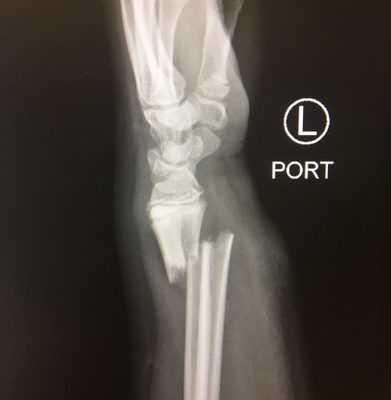
The economic and dynamic SALAD innovation recreates an actively vomiting patient and replicates visual obstruction from fluid contents during airway management.By the end of the session, learners are expected to: 1) discuss the risks, benefits, indications and contraindications associated with intubation of a vomiting or hemorrhaging patient.  2) Work with colleagues to effectively stabilize a patient who is actively vomiting or bleeding during airway management.  3) Competently perform intubation in the acute setting of visual obstruction from active emesis, hemorrhage, or massive regurgitation. 4) Increase speed and dexterity of intubation by applying the SALAD method when fluid obstructs visualization of the larynx.
ProceduresInnovations
Creative Commons images

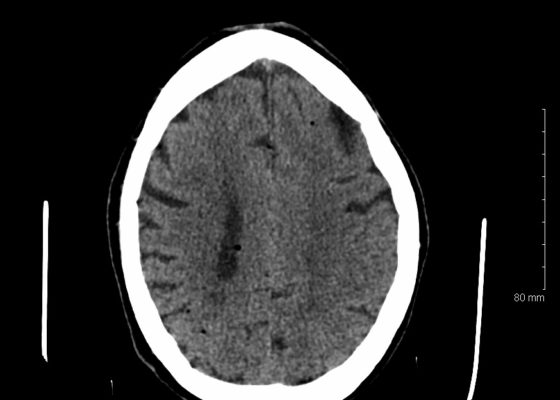
Pediatric Sedation for Forearm Fracture

Nichole Niknafs, DO* and Alisa Wray, MD, MAEd^

DOI: https://doi.org/10.21980/J8CS7K Issue 4:1[mrp_rating_result]
At the end of this simulation, participants will: 1) review options for pain control in pediatric patients, 2) perform a pre-sedation history and physical exam, 3) review the indications and contraindications for pediatric moderate sedation, 4) understand components of consent, and get consent from the patient’s parent, 5) list medication options for moderate sedation in a pediatric patient and review their appropriate doses, indications, contraindications, and side effects, 6) discuss management of moderate sedation complications, and 7) review criteria for discharging a patient after sedation. 
PediatricsOrthopedicsProcedures
Creative Commons images

Beware the Devastating Outcome of a Common Procedure

Ellsworth J Wright IV, MBS*, James F Martin MD^ and Kevin Sirchio, DO^

DOI: https://doi.org/10.21980/J8T336Issue 4:1[mrp_rating_result]
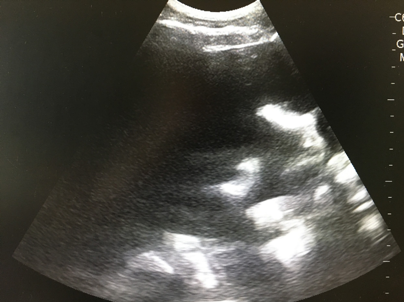
Non-contrast head computed tomography (CT) demonstrates multifocal bilateral hypodense lesions (white arrows) representing air emboli. Note the lesions are located in the intra-axial distribution which indicates an underlying vascular origin.
NeurologyProceduresVisual EM
Creative Commons images

Realistic and Inexpensive Ultrasound Guided Paracentesis Simulator Using Pork Belly with Skin

Jonathan Kei, MD, MPH* and Donald P Mebust, MD*

DOI: https://doi.org/10.21980/J8NK9RIssue 3:3[mrp_rating_result]
By the end of this instructional session learners should be able to: 1) Discuss the indications, contraindications, and complications associated with abdominal paracentesis; and 2) competently perform an ultrasound-guided abdominal paracentesis on a simulator and remove fluid.
Abdominal/GastroenterologyInnovationsProcedures
Creative Commons images

Low Cost Task Trainer for Neonatal Umbilical Catheterization

Caitlin Walsh Feeks, DO* and Linda Fan, MD*

DOI: https://doi.org/10.21980/J8HW6GIssue 3:3[mrp_rating_result]
By the end of this instructional session learners should: 1) Discuss the indications, contraindications, and complications associated with umbilical catheterization. 2) Competently perform umbilical catheterization on the task trainer. 3) Demonstrate proper securement of the catheter.
ProceduresInnovationsPediatrics
Creative Commons images

A Low Cost Escharotomy Simulation Model for Residency Education

Christopher Sampson, MD*, Catherine D Parker, MD*, Edward Burns, MD^, Marty Ruyan, BSN, RN†, Dena Higbee, EdS† and Timothy Koboldt, MD*

DOI: https://doi.org/10.21980/J8D34V Issue 3:3[mrp_rating_result]
By the end of this educational session, the learner will be able to: 1) Understand the indications for an escharotomy. 2) List equipment needed to perform an escharotomy. 3) Demonstrate how to perform an escharotomy. 4) Perform an escharotomy and experience the sensation of cutting through simulated burned tissue. 5) Understand post-escharotomy management and referral to specialist.
ProceduresInnovationsTrauma
Creative Commons images

Procedural Sedation for the removal of a rectal foreign body

John Costumbrado, MD, MPH*, Valerie Lew, BS* and David Wagner, MD*

DOI: https://doi.org/10.21980/J81332Issue 3:2[mrp_rating_result]
Axial and coronal views on CT showed evidence of a large, tube-shaped foreign body in the rectum (see arrows) without evidence of acute gastrointestinal tract disease.
Abdominal/GastroenterologyProceduresVisual EM

Utilizing the Flipped Classroom, Simulation-Based Mastery Learning and Group Learning to Teach and Evaluate Lumbar Puncture Skills

Amanda Crichlow, MD, MSMS*, Jessica Parsons, MD, MSMS*, Varsha Goswami, MD*, Srikala Ponnuru MD* and Sharon Griswold MD, MPH*

DOI: https://doi.org/10.21980/J8RW58 Issue 3:1[mrp_rating_result]
The goal of the curriculum is to teach and evaluate senior medical students / emergency medicine residents on the performance of a lumbar puncture using a group learning protocol. At the completion of the training session, learners should be able to: 1) Demonstrate how to perform a LP on an adult patient by achieving the minimum passing standard on the checklist, 2) state the indications and contraindications of performing a LP, and 3) state the potential complications that can occur after performing a LP.
ProceduresSimulationSmall Group Learning
«‹6›»
Page 6 of 8

JETem is an online, open access, peer-reviewed, journal-repository for EM educators. We are PMC Indexed.

Most Viewed

  • Enhancing Emergency Medicine Resident Education: A Weekly Education Series to Augment Electrocardiogram Education
  • Development and Design of a Pediatric Case-Based Virtual Escape Room on Acute Iron Toxicity
  • Pre-Clinical Case Competition to Assess Confidence in Responding to Select Out-Of-Hospital Medical Emergencies
  • Pediatric Difficult Airway Simulation Day
  • Cards Against Pulmonology

Visit Our Collaborators


Creative Commons Licence
This work is licensed under a Creative Commons Attribution 4.0 International License.

About

Education

Learners should benefit from active learning. JETem accepts submissions of team-based learning, small group learning, simulation, podcasts, lectures, innovations, curricula, question sets, and visualEM.

Scholarship

We believe educators should advance through the scholarship of their educational work. JETem gives educators the opportunity to publish scholarly academic work so that it may be widely distributed, thereby increasing the significance of their results.

Links

  • Home
  • Aim and Scope
  • Current Issue
  • For Reviewers
  • Instructions for Authors
  • Contact Us

Newsletter

Sign up to receive updates from JETem regarding newly published issues and findings.

Copyright Creative Commons Attribution 4.0 International