
Pediatrics
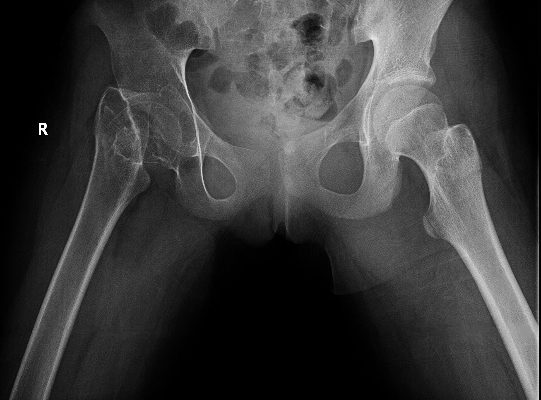

Case Report of Untreated Pediatric Femoral Neck Fracture with Osteopenia
DOI: https://doi.org/10.21980/J8S92KOn her right hip radiograph, the patient was found to have a right femoral neck fracture with superior displacement of the intertrochanteric portion of the right femur. Moreover, the radiograph demonstrated diffuse osteopenia of the right hip and femur from chronic disuse as characterized by the increased radiolucency of the cortical bones compared to the left side.
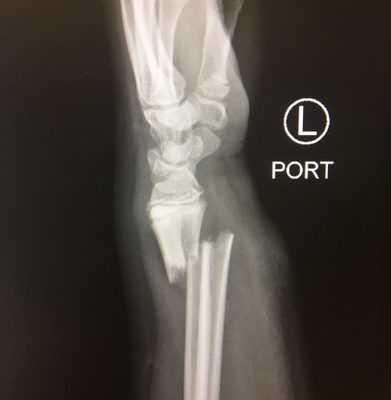

Pediatric Sedation for Forearm Fracture
DOI: https://doi.org/10.21980/J8CS7KAt the end of this simulation, participants will: 1) review options for pain control in pediatric patients, 2) perform a pre-sedation history and physical exam, 3) review the indications and contraindications for pediatric moderate sedation, 4) understand components of consent, and get consent from the patient’s parent, 5) list medication options for moderate sedation in a pediatric patient and review their appropriate doses, indications, contraindications, and side effects, 6) discuss management of moderate sedation complications, and 7) review criteria for discharging a patient after sedation.
Out-of-Hospital Delivery of a Live Newborn Requiring Resuscitation
DOI: https://doi.org/10.21980/J8834MBy the end of this simulation session, the learner will be able to: 1) perform a neonatal assessment, 2) identify which neonates require resuscitation, 3) understand the principles of neonatal resuscitation, 4) describe proper airway management in neonatal resuscitation, 5) discuss underlying etiologies or pathologies that may lead to a neonate to require resuscitation, and 6) communicate effectively with team members and nursing staff during the resuscitation of a critically ill neonate.

Pediatric Airway Team Based Learning
DOI: https://doi.org/10.21980/J8KH01This cTBL covers a variety of pediatric airway emergencies. Therefore, by the end of this cTBL, the learner will be able to: 1) List the signs and symptoms associated with airway foreign body obstructions. 2) State the appropriate management of upper and lower airway foreign bodies. 3) Discuss the symptoms, signs, and management of bacterial tracheitis. 4) Discuss a step-wise algorithm for emergency asthma treatment in the emergency department setting. 5) Identify the potential complications of tonsillectomy and the acute management of post-tonsillectomy hemorrhage.
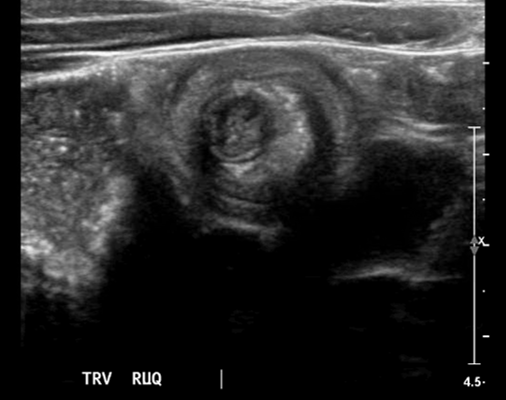
Brief Review of Intussusception Diagnosis and Management
DOI: https://doi.org/10.21980/J81P7FThe patient’s abdominal ultrasound revealed intussusception in the right upper abdominal quadrant. The transverse ultrasound view showed a “doughnut sign” (dashed yellow line), telescoping bowel (yellow arrow), and invaginated hyperechoic mesenteric fat with crescent configuration (dashed orange line). The sagittal ultrasound view demonstrated the intussusception formed by the outer recipient bowel loop (yellow arrows), invaginated hyperechoic mesenteric fat (orange asterisks), and telescoping bowel centrally (red arrow).
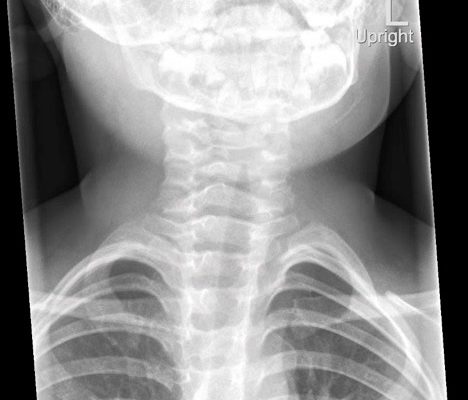
Croup
DOI: https://doi.org/10.21980/J8W05JThe anteroposterior X-ray reveals the classic steeple sign (blue outline) indicative of subglottic edema leading to tracheal narrowing, consistent with croup. The lateral x-ray shows narrowing of the subglottic region (green outline and arrows).


Low Cost Task Trainer for Neonatal Umbilical Catheterization
DOI: https://doi.org/10.21980/J8HW6GBy the end of this instructional session learners should: 1) Discuss the indications, contraindications, and complications associated with umbilical catheterization. 2) Competently perform umbilical catheterization on the task trainer. 3) Demonstrate proper securement of the catheter.
Pediatric Foreign Body Aspiration
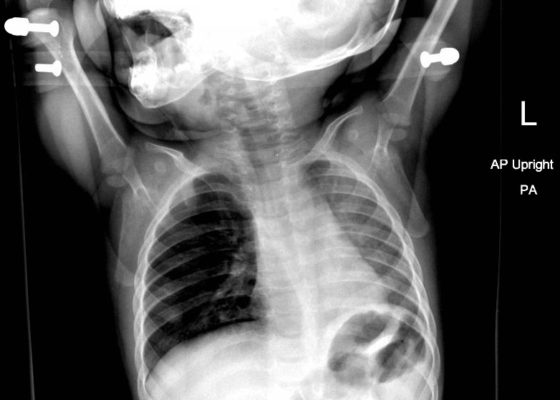
DOI: https://doi.org/10.21980/J8B648Chest radiograph showed increased radiolucency (red arrow) and flattening of the diaphragm on the right side (blue arrow) consistent with hyperinflation of the right lung, as well as left mediastinal shift (green arrow), indicating obstruction.