JETem
  • Home
  • About
    • Aim and Scope
    • Our Team
    • Editorial Board
    • FAQ
  • Issues
    • Current Issue
    • Ahead of Print
    • Past Issues
  • Visual EM
    • Latest Visual EM
    • Search Visual EM
    • Thumbnail Library
  • For Authors
    • Instructions for Authors
    • Submit to JETem
    • Photo Consent
    • Policies
      • Peer Review Policy
      • Copyright Policy
      • Editorial Policy, Ethics and Responsibilities
      • Conflicts of Interest & Informed Consent
      • Open Access Policy
  • For Reviewers
    • Instructions for JETem Reviewers
    • Interested in Being a JETem Reviewer?
  • Topic
    • Abdominal / Gastroenterology
    • Administration
    • Board Review
    • Cardiology / Vascular
    • Certifying Exam Cases
      • Clinical Decision-Making
      • Prioritization
      • Communication
      • Procedure & Ultrasound
    • Clinical Informatics, Telehealth and Technology
    • Dermatology
    • EMS
    • Endocrine
    • ENT
    • Faculty Development
    • Genitourinary
    • Geriatrics
    • Hematology / Oncology
    • Infectious Disease
    • Miscellaneous
    • Neurology
    • Ob / Gyn
    • Ophthalmology
    • Orthopedics
    • Pediatrics
    • Pharmacology
    • Procedures
    • Psychiatry
    • Renal / Electrolytes
    • Respiratory
    • Social Determinants of Health
    • Toxicology
    • Trauma
    • Ultrasound
    • Urology
    • Wellness
    • Wilderness
  • Modality
    • Certifying Exam Practice Cases
      • Clinical Care Cases
      • Communication & Procedural Cases
      • Old School Oral Board Cases
    • Curricula
    • Innovations
    • Lectures
    • Podcasts
    • Simulation
    • Small Group Learning
    • Team Based Learning
    • Visual EM
  • Contact Us

Posts by JETem

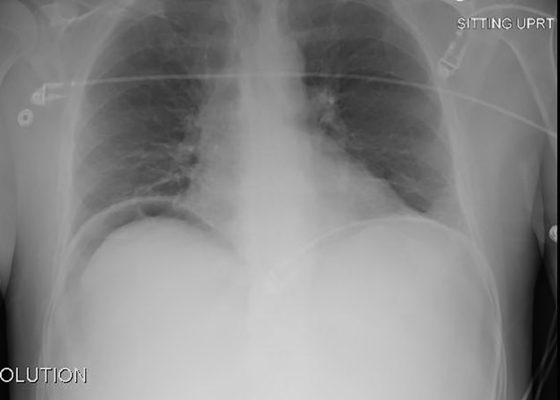
Pleural Effusion, AP Chest Xray JETem 2016

Large Right Pleural Effusion

Robert Rowe, MD* and Alisa Wray, MD*

DOI: https://doi.org/10.21980/J8D59FIssue 1:2[mrp_rating_result]
Chest x-ray and bedside ultrasound revealed a large right pleural effusion, estimated to be greater than two and a half liters in size.
RespiratoryVisual EM
Morel Lavalee Lesion

Morel-Lavallée Lesion

Grant G Simpson* and Brandon R Allen, MD*

DOI: https://doi.org/10.21980/J88G65Issue 1:2[mrp_rating_result]
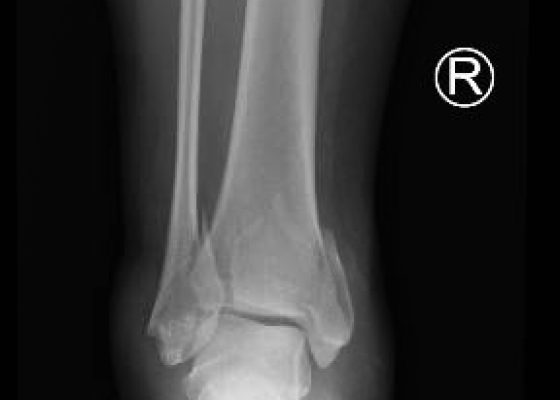
On physical examination, the patient was noted to have a nearly “watermelon-sized” fluctuant mass to his right lateral superior quadriceps with multiple overlying abrasions (Image 1). Computed tomography (CT) scans of the area showed a large heterogeneous collection measuring roughly 37x9.5x16 centimeters in the subcutaneous adipose layer of the lateral right thigh (Image 2), while ultrasonography revealed a complex fluid collection containing some nodular solid components and debris (Image 3). Additionally, radiographs confirmed multiple fractures including most significantly a pelvic ring fracture. Surgical debridement, evacuation, and sclerodhesis were performed nine weeks post injury to allow overlying abrasions to heal prior to intervention.
OrthopedicsVisual EM
Creative Commons images

A Faculty Development Session or Resident as Teacher Session for Didactic and Clinical Teaching Techniques; Part 1 of 2: Engaging Learners with Effective Didactic Teaching

Megan Boysen-Osborn, MD*, Shannon Toohey, MD*, Michael Gisondi, MD‡, and Margaret Wolff , MD^

DOI: https://doi.org/10.21980/J8RP4TIssue 1:1[mrp_rating_result]
By the end of this workshop, the learner will: 1) describe eight teaching techniques that encourage active learning during didactic sessions; 2) plan a didactic session using at least one of eight new teaching techniques for didactic instruction
Faculty DevelopmentLecturesTeam Based Learning (TBL)
Creative Commons images

A Faculty Development Session or Resident as Teacher Session for Clinical and Clinical Teaching Techniques; Part 2 of 2: Engaging Learners with Effective Clinical Teaching

Megan Boysen-Osborn, MD*, Margaret Wolff, MD‡, Michael Gisondi, MD^

DOI: https://doi.org/10.21980/J8MW2WIssue 1:1[mrp_rating_result]
By the end of this workshop, the learner will: 1) describe and implement nine new clinical teaching techniques; 2) implement clinical teaching techniques specific to junior and senior resident learners.
Faculty DevelopmentLecturesTeam Based Learning (TBL)

Carbon Monoxide Poisoning

Alisa Wray, MD*

DOI: https://doi.org/10.21980/J8KH59CIssue 1:1[mrp_rating_result]
By completing this oral board case learners will 1) evaluate a patient with altered mental status and discuss the differential diagnosis of a patient with altered mental status and weakness; 2) recognize the signs and symptoms of carbon monoxide poisoning; 3) manage treatment of a patient with carbon monoxide poisoning
ToxicologyBoard ReviewCertifying Exam Cases

Emergencies in Hemodialysis Patients

Shannon Toohey, MD*

DOI: https://doi.org/10.21980/J81591Issue 1:1[mrp_rating_result]
By the end of this session, the learner will: 1) describe primary dialysis complications; 2) construct a full differential for a dialysis patient presenting with complications; 3) formulate an appropriate treatment and resuscitation in an acutely ill dialysis patient; 4) plan appropriate disposition and utilization of consultants for dialysis complications.
Renal/ElectrolytesTeam Based Learning (TBL)

Approach to Acute Headache: A Flipped Classroom Module for Emergency Medicine Trainees

Jeff Riddell, MD*, Stacy Sawtelle, MD^, Paul Jhun, MD‡, James Comes, MD^, Ramin Tabatabai, MD~, Daniel Joseph, MD~, Jan Shoenberger, MD~, Esther Chen, MD‡, Christopher Fee, MD‡, and Stuart Swadron, MD~

DOI: https://doi.org/10.21980/J8WC73Issue 1:1[mrp_rating_result]
At the end of this module, the learner will be able to: 1) list the diagnoses critical to the emergency physician that may present with headache; 2) identify key historical and examination findings that help differentiate primary (benign) from secondary (serious) causes of headache; 3) discuss the indications for diagnostic imaging, lumbar puncture and laboratory testing in patients with headache; 4) recognize life-threatening diagnoses on CT imaging and CSF examination; 5) describe treatment strategies to relieve headache symptoms.
NeurologySmall Group Learning

Mesenteric Ischemia

Shannon Toohey, MD*

DOI: https://doi.org/10.21980/J8CC7FIssue 1:1[mrp_rating_result]
At the end of this simulation session, the learner will: 1) Recognize signs and symptoms of mesenteric ischemia; 2) order appropriately imaging and labs in the workup of an elderly patient with abdominal pain; 3) manage a patient with mesenteric ischemia, a rare, but serious cause of abdominal pain in the elderly; 4) discuss anchoring bias, specifically related to patients referred to the ED with an established diagnosis by outside specialists.
Abdominal/GastroenterologySimulation
«‹76›»
Page 76 of 85

JETem is an online, open access, peer-reviewed, journal-repository for EM educators. We are PMC Indexed.

Most Viewed

  • Simulation-Based Preparation for the American Board of Emergency Medicine Certifying Exam: A Comprehensive Curriculum for Residents
  • Difficult Conversation Case: Missed Testicular Cancer
  • Difficult Conversation Case: Death Notification
  • Managing Conflict Case: Admission of a Patient with Decompensated Schizophrenia, Hypertension, and Diabetes
  • Managing Conflict Case: The Difficult Consultant

Visit Our Collaborators


Creative Commons Licence
This work is licensed under a Creative Commons Attribution 4.0 International License.

About

Education

Learners should benefit from active learning. JETem accepts submissions of team-based learning, small group learning, simulation, podcasts, lectures, innovations, curricula, question sets, and visualEM.

Scholarship

We believe educators should advance through the scholarship of their educational work. JETem gives educators the opportunity to publish scholarly academic work so that it may be widely distributed, thereby increasing the significance of their results.

Links

  • Home
  • Aim and Scope
  • Current Issue
  • For Reviewers
  • Instructions for Authors
  • Contact Us

Newsletter

Sign up to receive updates from JETem regarding newly published issues and findings.

Copyright Creative Commons Attribution 4.0 International