
JETem
  • Home
  • About
    • Aim and Scope
    • Our Team
    • Editorial Board
    • FAQ
  • Issues
    • Current Issue
    • Ahead of Print
    • Past Issues
  • Visual EM
    • Latest Visual EM
    • Search Visual EM
    • Thumbnail Library
  • For Authors
    • Instructions for Authors
    • Submit to JETem
    • Photo Consent
    • Policies
      • Peer Review Policy
      • Copyright Policy
      • Editorial Policy, Ethics and Responsibilities
      • Conflicts of Interest & Informed Consent
      • Open Access Policy
  • For Reviewers
    • Instructions for JETem Reviewers
    • Interested in Being a JETem Reviewer?
  • Topic
    • Abdominal/Gastroenterology
    • Administration
    • Board Review
    • Cardiology/Vascular
    • Certifying Exam Cases
      • Clinical Decision-Making
      • Prioritization
      • Communication
      • Procedure & Ultrasound
    • Clinical Informatics, Telehealth and Technology
    • Dermatology
    • EMS
    • Endocrine
    • ENT
    • Faculty Development
    • Genitourinary
    • Geriatrics
    • Hematology/Oncology
    • Infectious Disease
    • Miscellaneous (stats, etc)
    • Neurology
    • Ob/Gyn
    • Ophthalmology
    • Orthopedics
    • Pediatrics
    • Pharmacology
    • Procedures
    • Psychiatry
    • Renal/Electrolytes
    • Respiratory
    • Social Determinants of Health
    • Toxicology
    • Trauma
    • Ultrasound
    • Urology
    • Wellness
    • Wilderness
  • Modality
    • Certifying Exam Practice Cases
      • Clinical Care Cases
      • Communication & Procedural Cases
      • Old School Oral Board Cases
    • Curricula
    • Innovations
    • Lectures
    • Podcasts
    • Simulation
    • Small Group Learning
    • Team Based Learning (TBL)
    • Visual EM
  • Contact Us

Posts by JETem

Creative Commons images

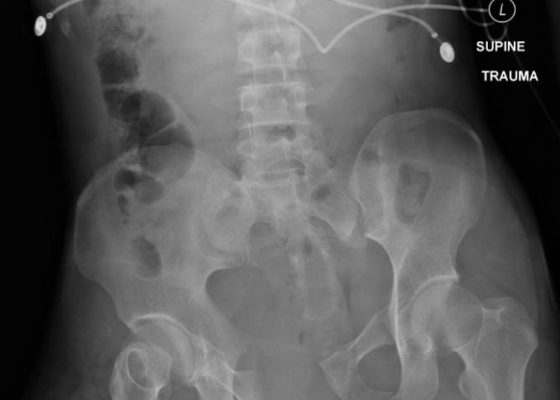
Open Book Pelvic Fracture

Samer Assaf, MD* and Ghadi Ghanem*

DOI: https://doi.org/10.21980/J8CK7H Issue 2:3[mrp_rating_result]
The initial radiograph of the pelvis shows an open-book pelvic fracture deformity with pubic symphyseal dislocation, left greater than right sacroiliac diastases, and fractures of the left superior and inferior pubic rami, right inferior pubic ramus, and left acetabular anterior column. The additional inlet and outlet radiographs of the pelvis after application of a pelvic binder also show an open book fracture with significant improvement of the widened pubic symphysis.
OrthopedicsTraumaVisual EM
Creative Commons images

Oropharynx Ulceration

Lauren Sylwanowicz, MD* and Andrew Wong, MD, MBA*

DOI: https://doi.org/10.21980/J87W60 Issue 2:4[mrp_rating_result]
The photograph demonstrates an area of ulcerative tissue at the left palatine tonsil without surrounding erythema or purulent drainage. The computed tomography (CT) scan shows a large ulceration of the left soft palate and palatine tonsil (red arrow). There is no evidence of skull base osteomyelitis. There is suppurative lymphadenopathy with partial left jugular vein compression due to mass effect (yellow highlight). There is mild nasopharyngeal airway narrowing with architectural distortion (blue arrow), but no other evidence of airway obstruction. 
ENTVisual EM
Creative Commons images

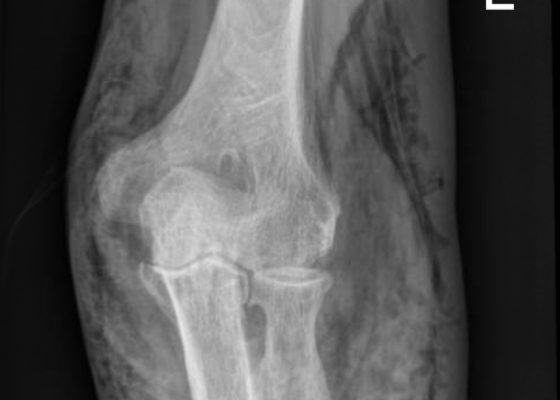
Subcutaneous Emphysema in Non-Necrotizing Soft Tissue Injury

Hamid Ehsani-Nia, MS, DO* and Lauren Sylwanowicz MD ^

DOI: https://doi.org/10.21980/J8432M Issue 2:4[mrp_rating_result]
X-Rays of the elbow revealed diffuse striated lucencies throughout the soft tissue, consistent with extensive subcutaneous air throughout the superficial and deep tissues. There was no evidence of a fracture.
Infectious DiseaseOrthopedicsVisual EM
Creative Commons images

An Elderly Male with Amyand’s Hernia

Saema Said, MD* and Roozbeh Houshyar, MD^

DOI: https://doi.org/10.21980/J80D13 Issue 2:4[mrp_rating_result]
Ultrasound of the right scrotum shows a right inguinal hernia with an air-containing loop of bowel (white arrow) and a non-compressible appendix (yellow arrow). Coronal and axial views of abdomen-pelvis CT show a right inguinal hernia containing a loop of small bowel (white arrow) and appendix (yellow arrow).
Abdominal/GastroenterologyVisual EM
Creative Commons images

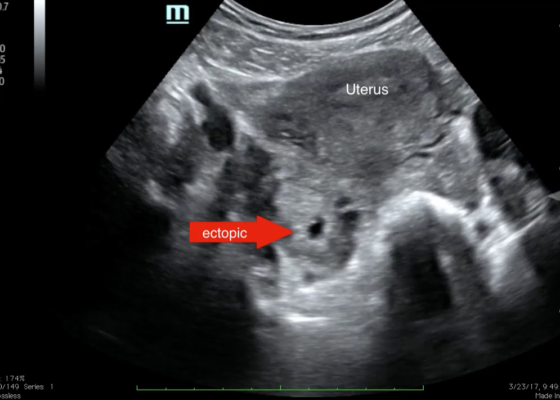
Point-of-care Ultrasound for the Diagnosis of Ectopic Pregnancy

Ahmed Farhat, BS*, Jessica Hoffmann, MD* and Maili Alvarado, MD^

DOI: https://doi.org/10.21980/J8VK7VIssue 2:4[mrp_rating_result]
The transabdominal pelvic ultrasound shows an empty uterus (annotated) with free fluid and a right sided extrauterine gestational sac representing an ectopic pregnancy (red arrow).
Ob/GynUltrasoundVisual EM
Creative Commons images

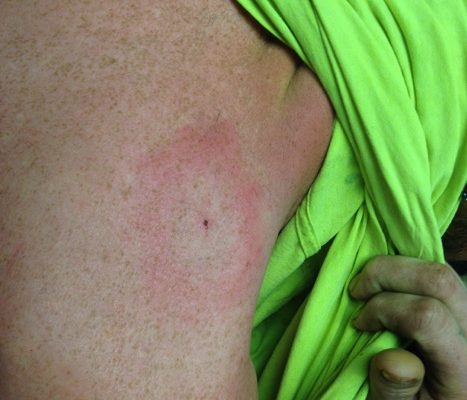
Erythema Migrans

Daniel Polvino, MD* and Grant Wei, MD*

DOI: https://doi.org/10.21980/J8QW7QIssue 2:4[mrp_rating_result]
History of present illness: A 28-year-old male presented to the emergency department with a chief complaint of two weeks of headache, chills, and numbness in his hands. He reported removing a tick from his upper back approximately two weeks ago, but did not know how long the tick had been embedded. His review of symptoms was otherwise unremarkable. Significant findings:
DermatologyInfectious DiseaseVisual EM
Creative Commons images

Spontaneous Pneumothorax

John Costumbrado, MD, MPH* and Steven Kim, MD*

DOI: https://doi.org/10.21980/J8M33BIssue 2:4[mrp_rating_result]
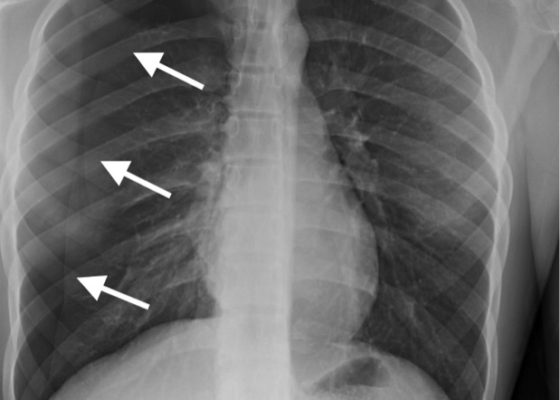
Initial chest radiograph showed a 50% right-sided pneumothorax with no mediastinal shift, which can be identified by the sharp line representing the pleural lung edge (see arrows) and lack of peripheral lung markings extending to the chest wall. While difficult to accurately estimate volume from a two-dimensional image, a 2 cm pneumothorax seen on chest radiograph correlates to approximately 50% volume.1 The patient underwent insertion of a pigtail pleural drain on the right and repeat chest radiograph showed resolution of previously seen pneumothorax. Ultimately the pigtail drain was removed and chest radiograph showed clear lung fields without evidence of residual pneumothorax or pleural effusion.
RespiratoryVisual EM
Creative Commons images

Pediatric Esophageal Foreign Body

Samer Assaf, MD* and Ryan Gibney, BS*

DOI: https://doi.org/10.21980/J8GD1F Issue 2:4[mrp_rating_result]
A radiopaque foreign body was visualized in the proximal esophagus at the thoracic inlet on the chest and neck radiographs. The foreign body appeared to be metallic with visualized concentric rings consistent with a coin.
Abdominal/GastroenterologyPediatricsVisual EM
«‹65›»
Page 65 of 87

JETem is an online, open access, peer-reviewed, journal-repository for EM educators. We are PMC Indexed.

Most Viewed

  • Enhancing Emergency Medicine Resident Education: A Weekly Education Series to Augment Electrocardiogram Education
  • Development and Design of a Pediatric Case-Based Virtual Escape Room on Acute Iron Toxicity
  • Pre-Clinical Case Competition to Assess Confidence in Responding to Select Out-Of-Hospital Medical Emergencies
  • Pediatric Difficult Airway Simulation Day
  • Cards Against Pulmonology

Visit Our Collaborators


Creative Commons Licence
This work is licensed under a Creative Commons Attribution 4.0 International License.

About

Education

Learners should benefit from active learning. JETem accepts submissions of team-based learning, small group learning, simulation, podcasts, lectures, innovations, curricula, question sets, and visualEM.

Scholarship

We believe educators should advance through the scholarship of their educational work. JETem gives educators the opportunity to publish scholarly academic work so that it may be widely distributed, thereby increasing the significance of their results.

Links

  • Home
  • Aim and Scope
  • Current Issue
  • For Reviewers
  • Instructions for Authors
  • Contact Us

Newsletter

Sign up to receive updates from JETem regarding newly published issues and findings.

Copyright Creative Commons Attribution 4.0 International