A Case Report of a Coin Stack Masquerading as a Button Battery
Correspondence should be addressed to Timothy P Young, MD at tpyoung@llu.edu
DOI: https://doi.org/10.5070/53886
ABSTRACT:
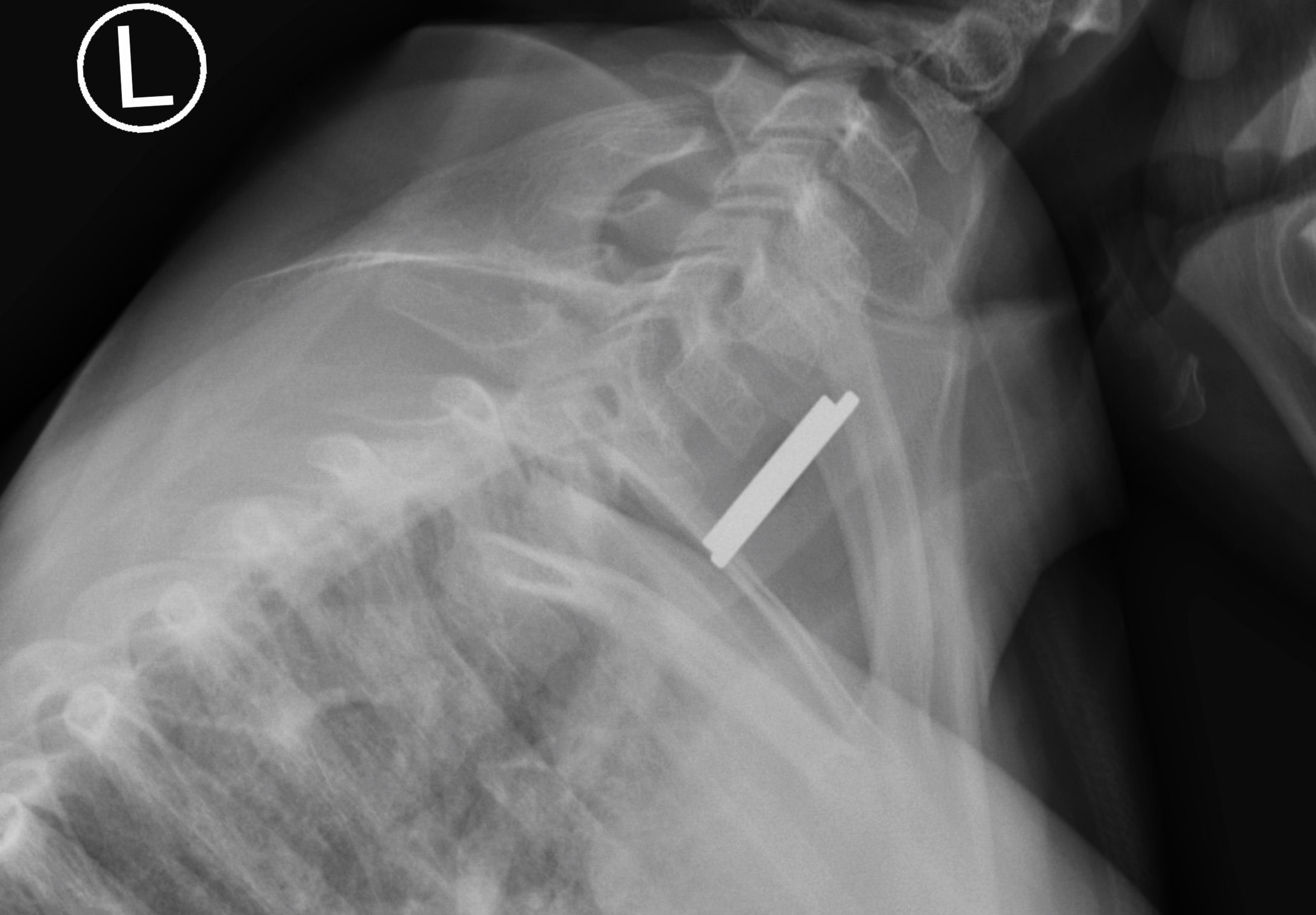
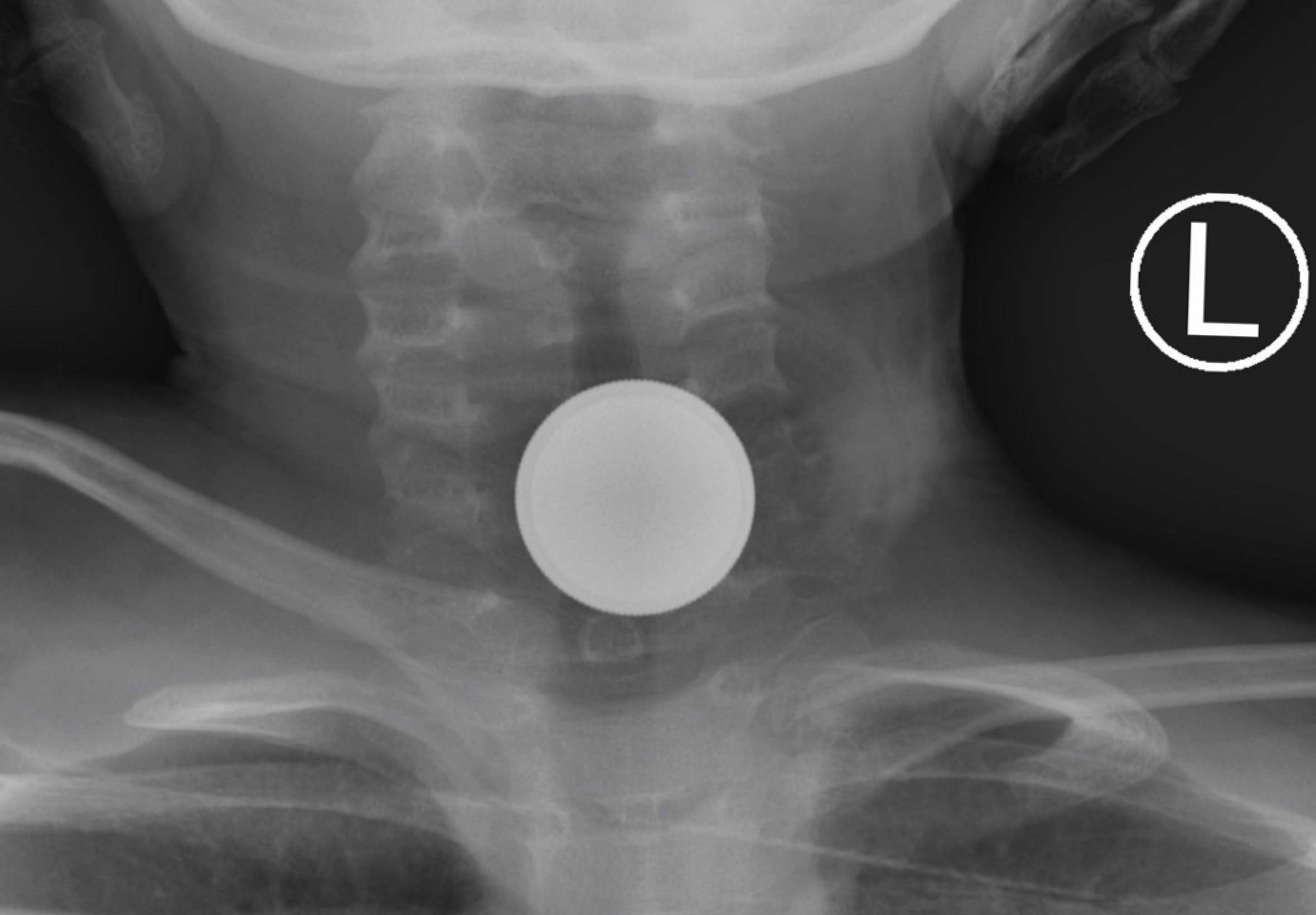
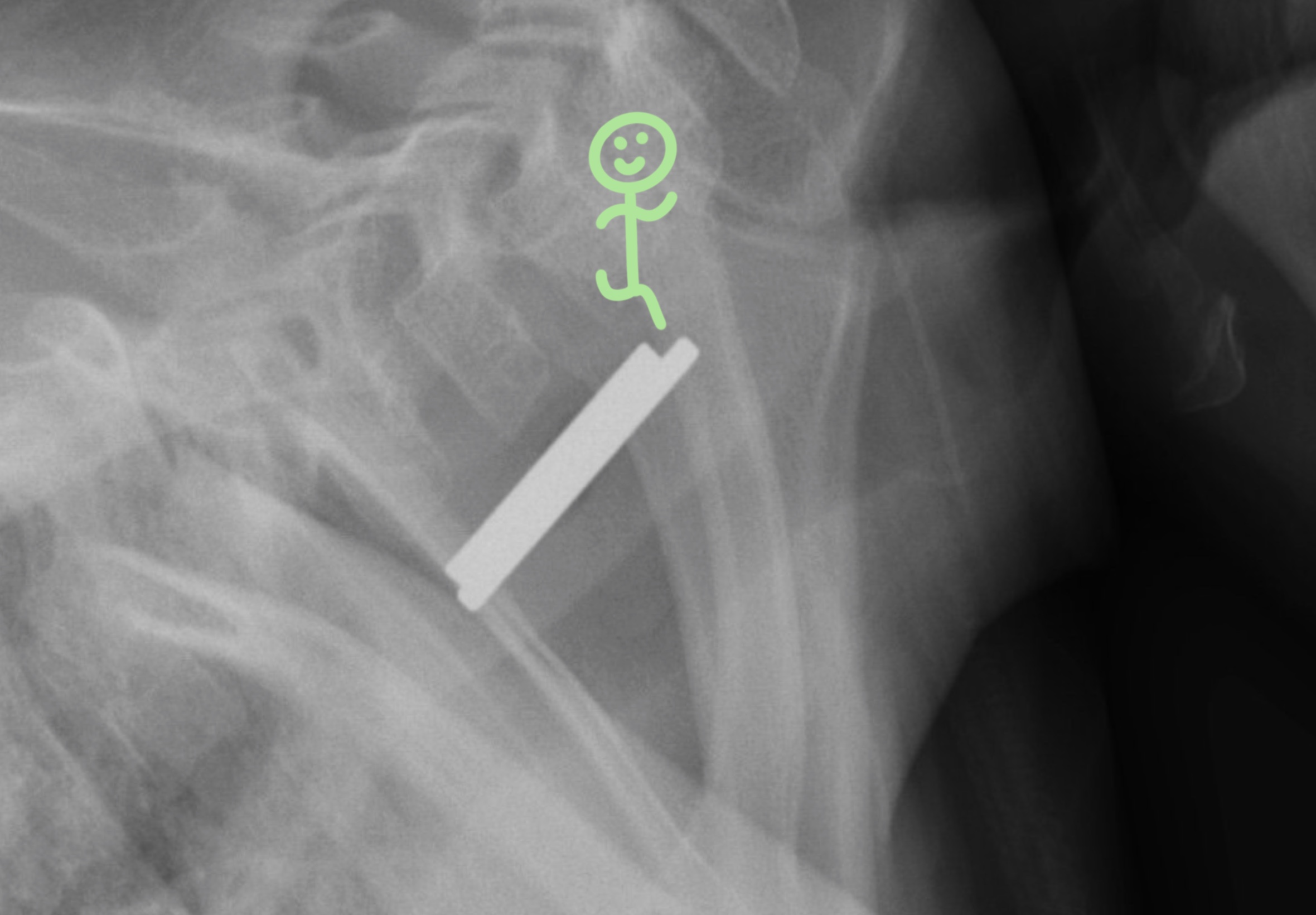
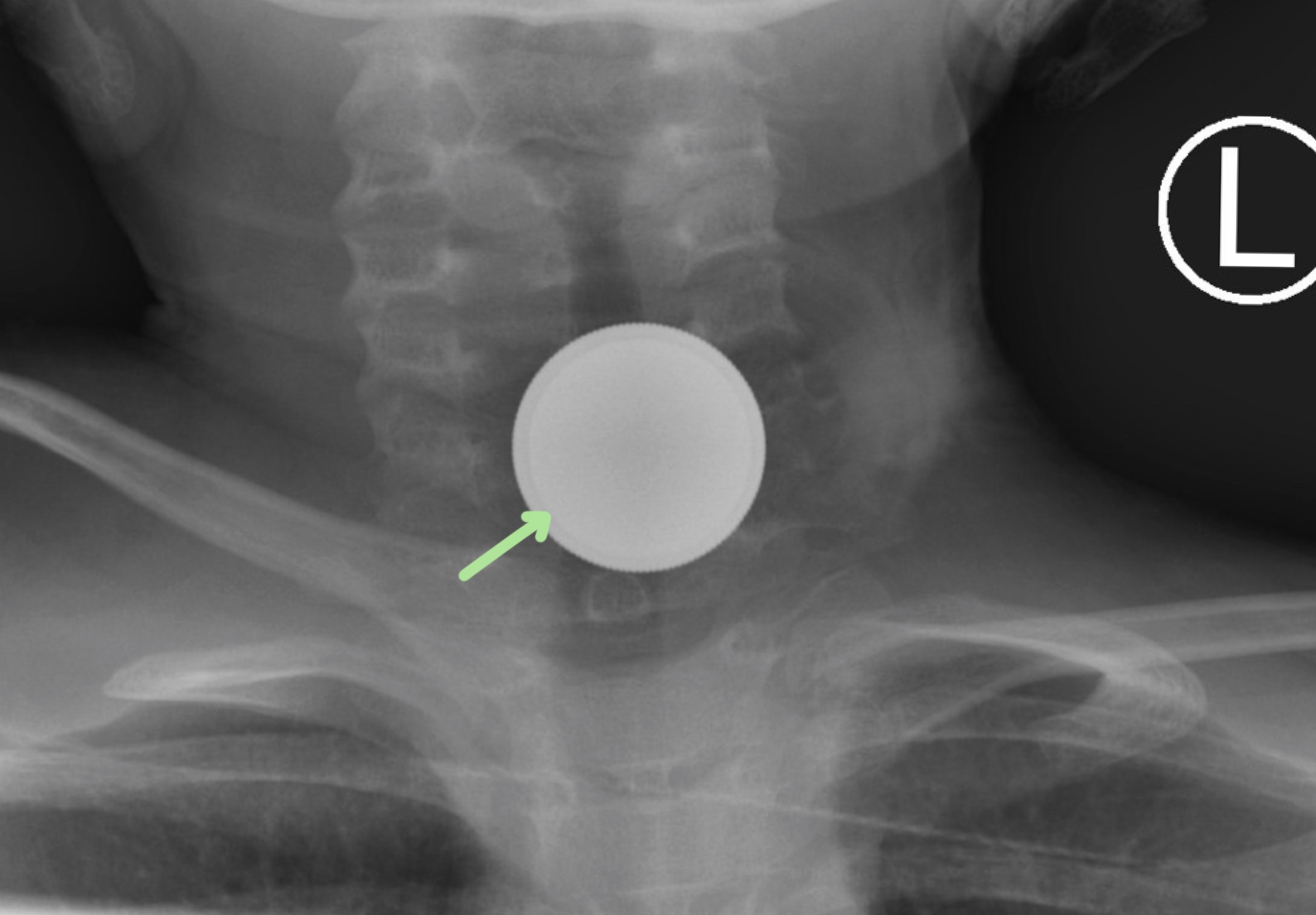
Children presenting to emergency departments who are found to have flat, round esophageal foreign bodies (FB) are often transferred to sites capable of foreign body removal. Coins are the most common FBs ingested in pediatric patients. However, button battery (BB) ingestions are a high-risk esophageal FB that can lead to severe injury. It is imperative to distinguish between these two radiographically similar objects to ensure expedited removal of BBs. The halo sign and step-off sign are characteristic of BBs. The presented case demonstrates an exception, where a coin stack (CS) mimicked a BB. A six-year-old female arrived at a tertiary care center as a transfer from an outside hospital with concern for BB ingestion. Her presenting symptoms were vomiting, gagging, and drooling. Her chest x-ray showed a radio-opaque, esophageal FB with halo and step-off signs. The circular FB was urgently removed and proved to be a nickel overlying a quarter. Due to the relative rarity of CSs and the difficulty to radiologically distinguish from high-risk BBs, CSs should be treated as BB ingestions—the FB should be removed urgently, and the final object identification should be determined operatively.
Topics: Button battery, halo sign, step-off sign, coin stack, esophageal foreign body.