JETem
  • Home
  • About
    • Aim and Scope
    • Our Team
    • Editorial Board
    • FAQ
  • Issues
    • Current Issue
    • Ahead of Print
    • Past Issues
  • Visual EM
    • Latest Visual EM
    • Search Visual EM
    • Thumbnail Library
  • For Authors
    • Instructions for Authors
    • Submit to JETem
    • Photo Consent
    • Policies
      • Peer Review Policy
      • Copyright Policy
      • Editorial Policy, Ethics and Responsibilities
      • Conflicts of Interest & Informed Consent
      • Open Access Policy
      • Acceptance Fee
  • For Reviewers
    • Instructions for JETem Reviewers
    • Interested in Being a JETem Reviewer?
  • Topic
    • Abdominal/Gastroenterology
    • Administration
    • Board Review
    • Cardiology/Vascular
    • Certifying Exam Cases
      • Clinical Decision-Making
      • Prioritization
      • Communication
      • Procedure & Ultrasound
    • Clinical Informatics, Telehealth and Technology
    • Dermatology
    • EMS
    • Endocrine
    • ENT
    • Faculty Development
    • Genitourinary
    • Geriatrics
    • Hematology/Oncology
    • Infectious Disease
    • Miscellaneous (stats, etc)
    • Neurology
    • Ob/Gyn
    • Ophthalmology
    • Orthopedics
    • Pediatrics
    • Pharmacology
    • Procedures
    • Psychiatry
    • Renal/Electrolytes/Nutrition
    • Respiratory
    • Social Determinants of Health
    • Toxicology
    • Trauma
    • Ultrasound
    • Urology
    • Wellness
    • Wilderness
  • Modality
    • Certifying Exam Practice Cases
      • Clinical Care Cases
      • Communication & Procedural Cases
      • Old School Oral Board Cases
    • Curricula
    • Innovations
    • Lectures
    • Podcasts
    • Simulation
    • Small Group Learning
    • Team Based Learning (TBL)
    • Visual EM
  • Contact Us

Blunt Cerebrovascular Injury: A Visual Case Report with Computed Tomography Angiography Findings Revealing Carotid and Vertebral Artery Dissection

Edmund Hsu, MD*, Andrew T Kinoshita, MD, MPH^, Elanor Chu, MD† and C Eric McCoy, MD, MPH*

*University of California, Irvine, Department of Emergency Medicine, Orange, CA
^University of California, Irvine, School of Medicine, Irvine, CA
†University of California, Irvine, Department of Radiology, Orange, CA

Correspondence should be addressed to Edmund Hsu, MD at edhsu@hs.uci.edu

DOI: https://doi.org/10.5070/M5.52229 Issue 11:3
Visual EMCurrent Issue
[mrp_rating_result]

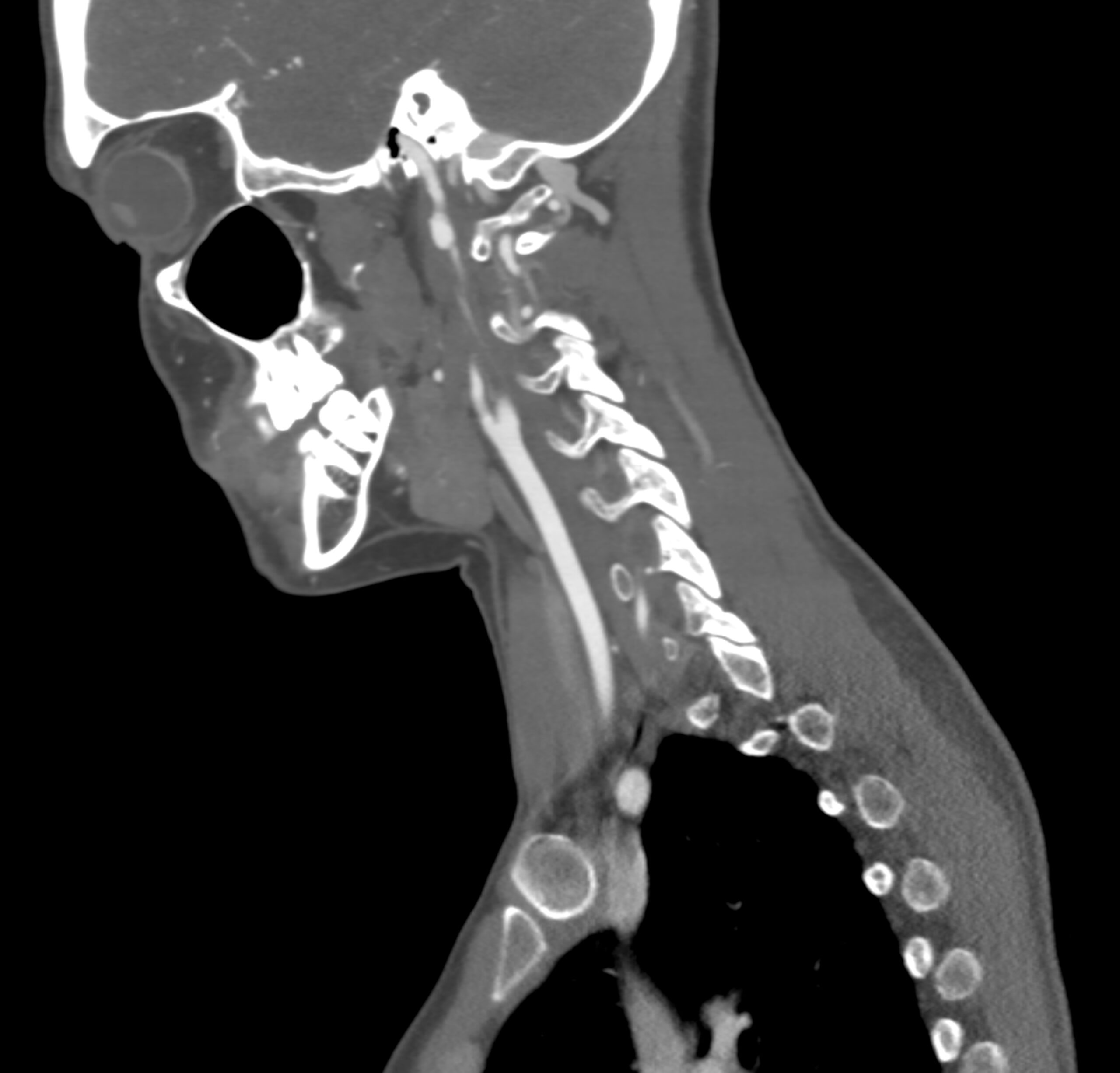
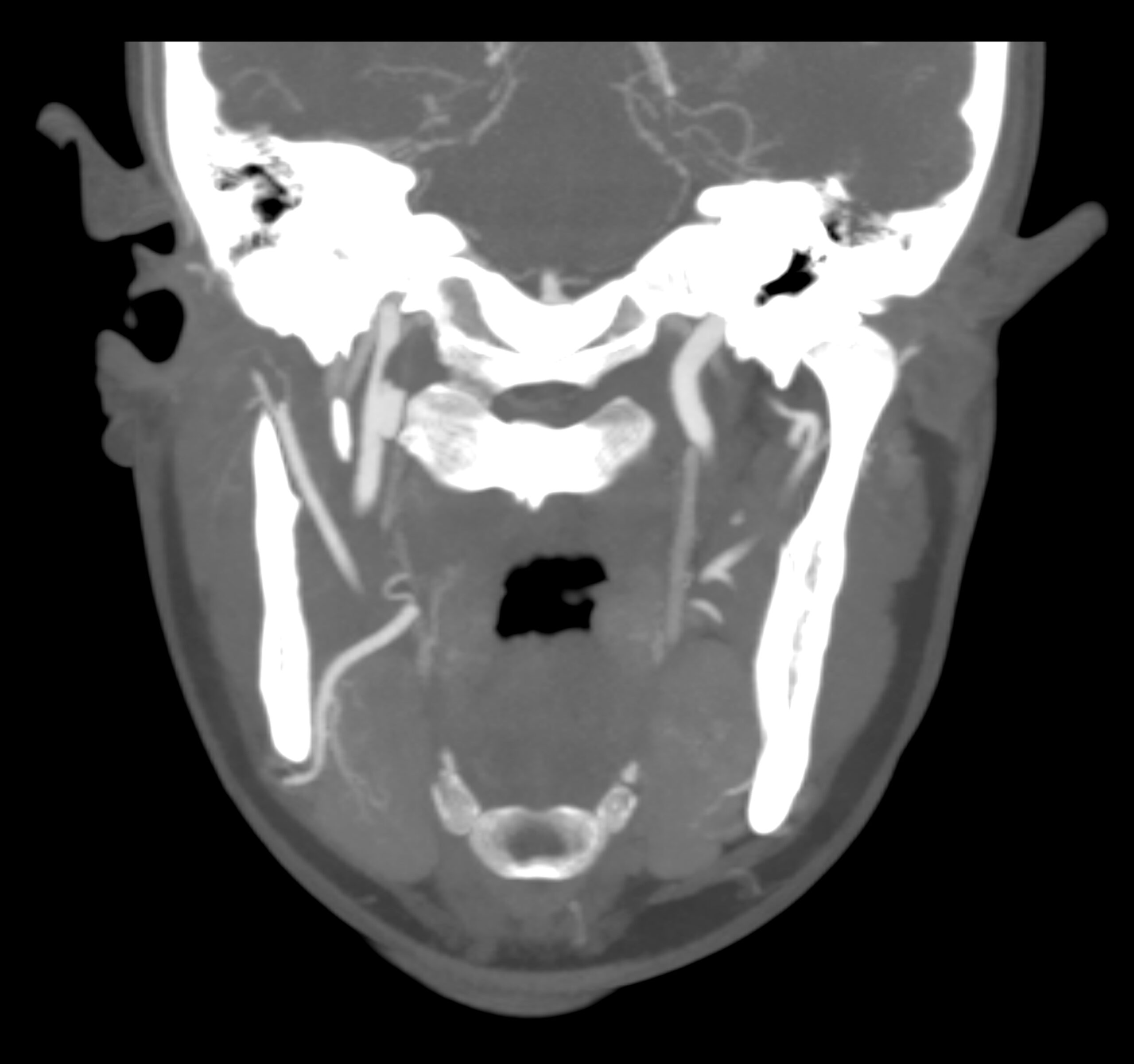
Blunt Cerebrovascular Injury. CT Coronal Internal Carotid Unannotated. JETem 2026
Blunt Cerebrovascular Injury. CT Sagital Internal Carotid Unannotated. JETem 2026
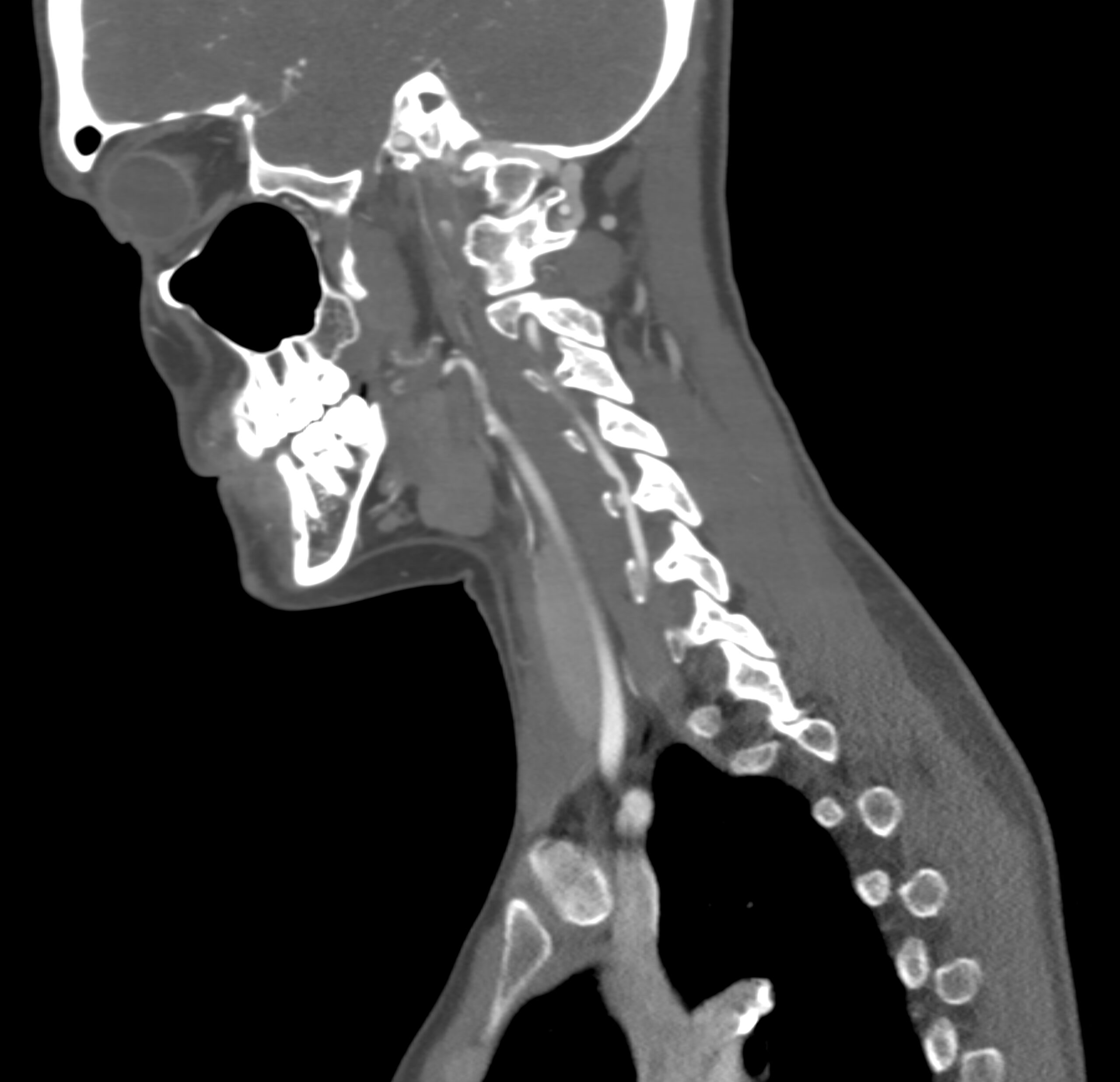
Blunt Cerebrovascular Injury. CT Sagital Vertebral Artery Unannotated. JETem 2026
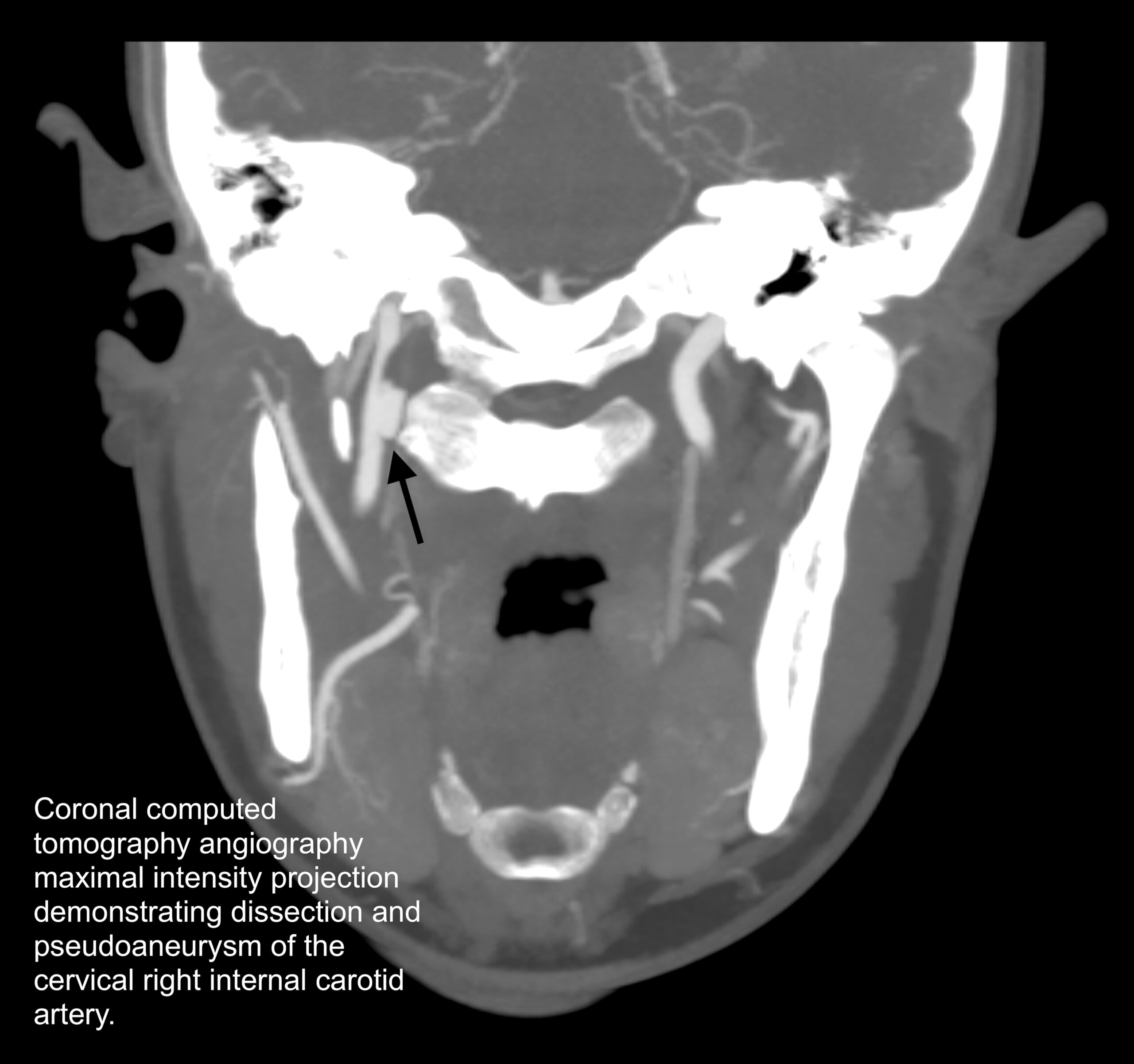
Blunt Cerebrovascular Injury. CT Coronal Internal Carotid Annotated. JETem 2026
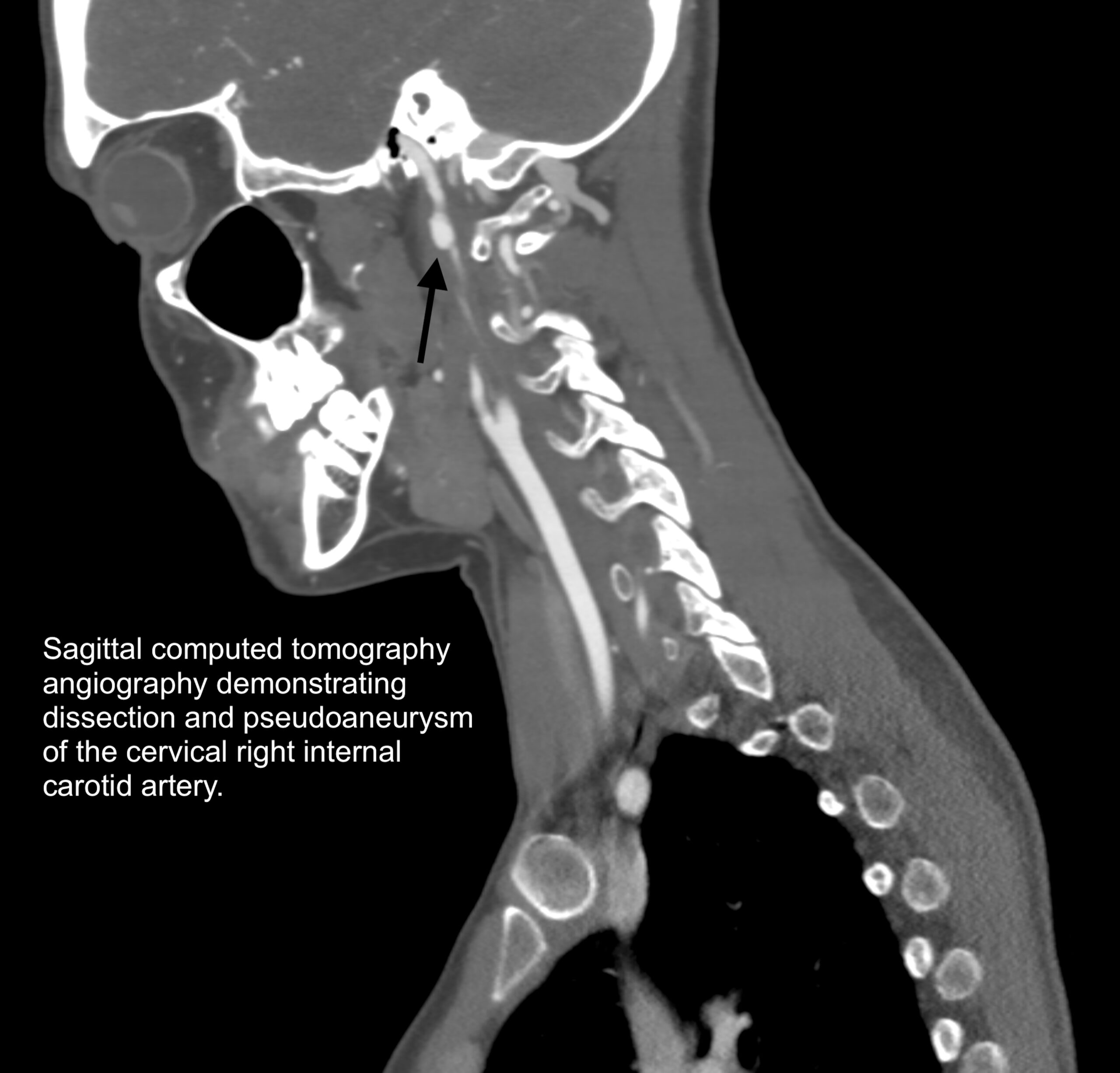
Blunt Cerebrovascular Injury. CT Sagital Internal Carotid Annotated. JETem 2026
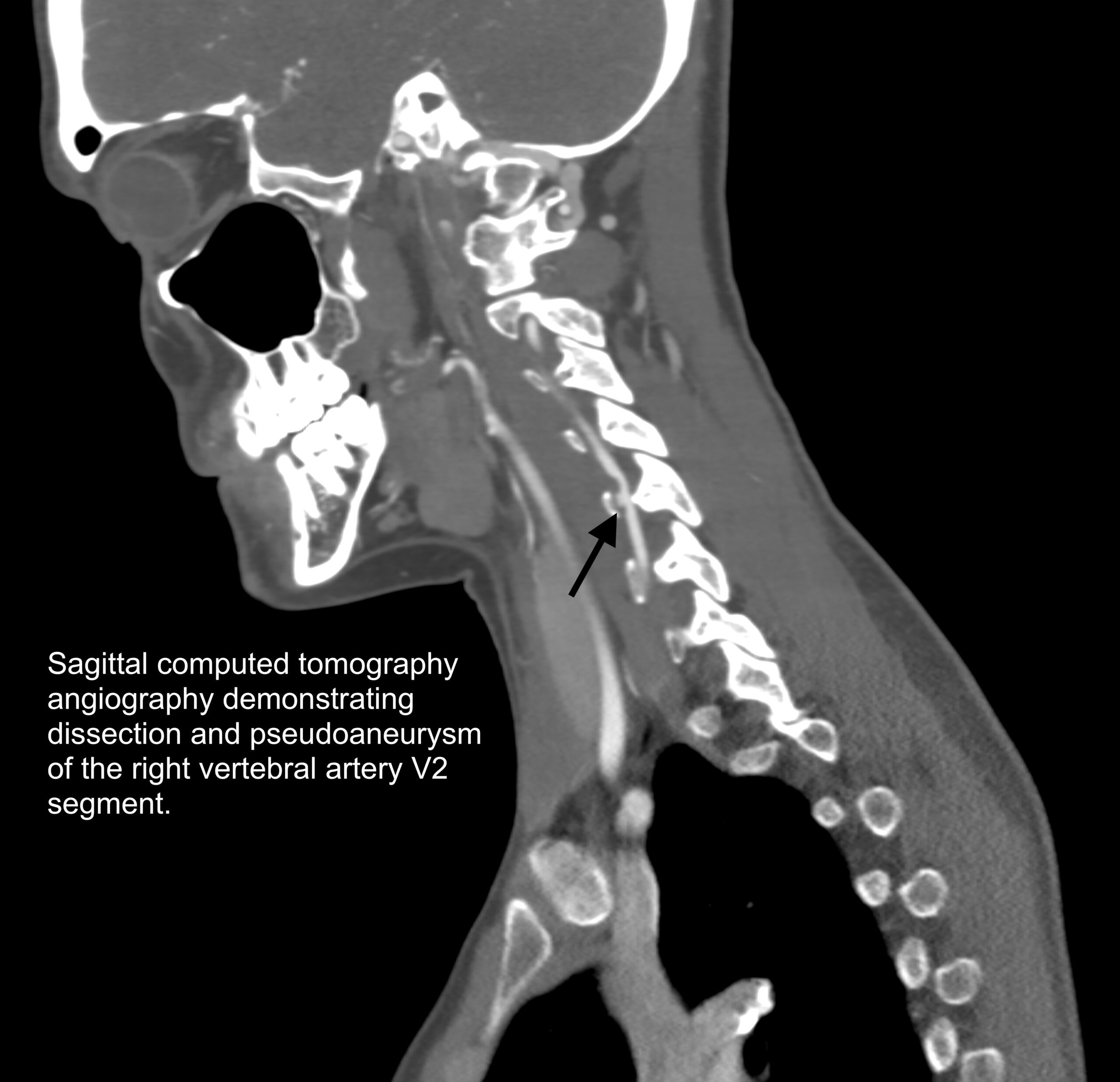
Blunt Cerebrovascular Injury. CT Sagital Vertebral Artery Annotated. JETem 2026

ABSTRACT:

Blunt cerebrovascular injury (BCVI) is defined as blunt traumatic injury to the carotid or vertebral vessels. Although rare, understanding risk factors and management of possible complications is vital in the emergency department (ED) setting since BCVI is associated with ischemic stroke and potential for poor neurologic outcome or death. In this case, a 27-year-old female patient presented with headache following a motor vehicle collision. Computed tomography angiography (CTA) of the neck revealed a right internal carotid artery dissection. Despite the injury, the patient was largely asymptomatic besides headache and discharged on acetylsalicylic acid (ASA) 81 mg to prevent stroke. Follow-up CTA one week later revealed worsening of the carotid dissection and a new vertebral artery dissection. The patient was admitted and received a diagnostic cerebral angiogram that elucidated the extent of her vascular injuries. The patient was discharged on ASA 325 mg and was followed for 27 months with no further neurological symptoms. Blunt cerebrovascular injury is a potentially life-threatening, yet often underrecognized, injury that occurs in the carotid or vertebral arteries. It is most often associated with high-energy trauma. Up to 80% of patients with BCVI are initially asymptomatic, and effective screening is important for timely diagnosis. Computed tomography angiography is the preferred choice for initial screening and diagnosis of BCVI. Treatment may involve surgical repair, endovascular intervention, and antithrombotic therapy.

Topics: Blunt cerebrovascular injury (BCVI), carotid artery dissection, vertebral artery dissection, computed tomography angiography (CTA), case report.

Icon

Blunt Cerebrovascular Injury - Manuscript

1 file(s) 1.28 MB
Download
Icon

Blunt Cerebrovascular Injury - Images

1 file(s) 26.99 MB
Download
CTIssue 11:3

Reviews:

[mrp_rating_entry_details_list layout="inline" show_rating_items="false"][mrp_rating_form]
Occult Pneumoperitoneum. Figure 1 Unannotated. JETem 2026

A-Lines below the Diaphragm – A Case Report of...

31 Jul, 26
Coin Stack. Neck XR Lateral Unannotated. JETem 2026

A Case Report of a Coin Stack Masquerading as a...

31 Jul, 26

JETem is an online, open access, peer-reviewed, journal-repository for EM educators. We are PMC Indexed.

Most Viewed

  • Simple Auricular Hematoma (“Cauliflower Ear”) Task Trainer
  • The Three Breath Method: Teaching Coping Mechanisms for Processing Patient Death
  • Clinical Decision Making: Acute Ischemic Stroke with Large Vessel Occlusion
  • PRIMER: Premedical Introduction to Mentored Emergency Research: Connecting Undergraduate Assistants and Emergency Medicine Residents in a Community Hospital Setting
  • Dangerous Dysrhythmias in the ED: An Interactive EKG Workshop for Emergency Medicine Clerkship Learners

Visit Our Collaborators


Creative Commons Licence
This work is licensed under a Creative Commons Attribution 4.0 International License.

About

Education

Learners should benefit from active learning. JETem accepts submissions of team-based learning, small group learning, simulation, podcasts, lectures, innovations, curricula, question sets, and visualEM.

Scholarship

We believe educators should advance through the scholarship of their educational work. JETem gives educators the opportunity to publish scholarly academic work so that it may be widely distributed, thereby increasing the significance of their results.

Links

  • Home
  • Aim and Scope
  • Current Issue
  • For Reviewers
  • Instructions for Authors
  • Contact Us

Newsletter

Sign up to receive updates from JETem regarding newly published issues and findings.

Copyright Creative Commons Attribution 4.0 International