
Ultrasound
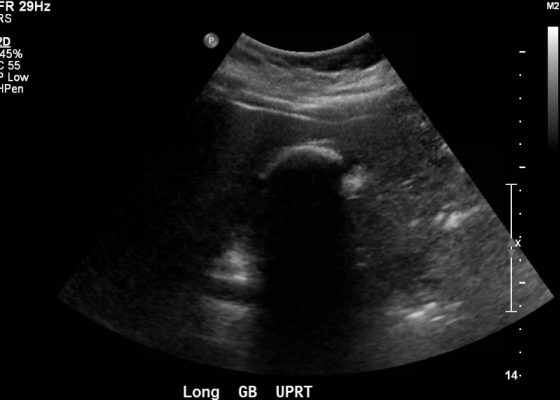

Cholelithiasis: WES Sign
DOI: https://doi.org/10.21980/J8X300Abdominal ultrasound showed the classic presentation of the Wall-Echo-Shadow (WES) sign. The superficial aspect of the gallbladder wall is represented by a hyperechogenic curve. Below this, bile fluid is represented by hypoechogenicity. Underneath the bile fluid is the echo of the dense border created by the collection of gallstones, represented by a hyperechogenic curve. Due to the high density of the gallstones, nothing deeper can be visualized (including other gallstones or the far end of the gallbladder); this is the shadow.

A Formalized Three-Year Emergency Medicine Residency Ultrasound Education Curriculum
DOI: https://doi.org/10.21980/J8RG6HLearners will 1) know the indications for each the 11 ACEP point-of-care ultrasound (POCUS) applications; 2) perform each of the 11 ACEP POCUS applications; 3) integrate POCUS into medical decision-making.

Atrial Myxoma
DOI: https://doi.org/10.21980/J87P45Bedside ultrasound revealed the presence of a left atrial mass that appeared to be tethered to the mitral valve. The mass was best viewed on ultrasound in the apical four-chamber window with the phased array probe placed over the patients’ point of maximal impact (PMI), with the patient in left lateral decubitus position.
Left Ventricular Assist Device (LVAD) Cardiac Ultrasound
Keywords: LVAD, left ventricular assist device, ultrasound, TTE, transthoracic ultrasound Image credit: Drs. Madison Nashu and Megan Guy