Small Group Learning

Implementing the Stop the Bleed Campaign in a University Community
DOI: https://doi.org/10.21980/J84D0ZThe main objective is to implement a system to use available resources of the Stop the Bleed campaign to widely educate members of the university community in the utilization of multiple compression techniques including direct pressure, tourniquet application, and wound packing. Additional course objectives include using the Stop the Bleedsm campaign to teach participants how to fit into the emergency response team as the immediate responder and the identification of life-threatening bleeding.

A Model Curriculum for an Emergency Medical Services (EMS) Rotation for Emergency Medicine Residents
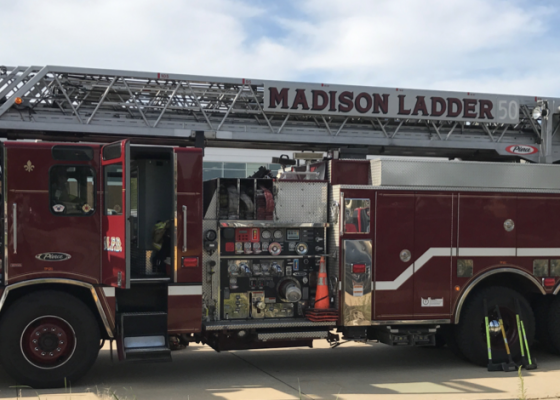
DOI: https://doi.org/10.21980/J8DD0FThe aim of this curriculum is to provide a robust learning experience for EM residents around prehospital care and EMS that fulfills the ACGME requirements and which can be easily replicated and implemented in a variety of EM residency training programs.
Utilizing the Flipped Classroom, Simulation-Based Mastery Learning and Group Learning to Teach and Evaluate Lumbar Puncture Skills
DOI: https://doi.org/10.21980/J8RW58The goal of the curriculum is to teach and evaluate senior medical students / emergency medicine residents on the performance of a lumbar puncture using a group learning protocol. At the completion of the training session, learners should be able to: 1) Demonstrate how to perform a LP on an adult patient by achieving the minimum passing standard on the checklist, 2) state the indications and contraindications of performing a LP, and 3) state the potential complications that can occur after performing a LP.
The Toxiscape Hunt: An Escape Room-Scavenger Hunt for Toxicology Education
DOI: https://doi.org/10.21980/J8NW58By the end of the activity, learners should be able to: 1) Calculate an anion and osmolal gap. 2) Recognize poisonings amenable to hemodialysis. 3) Interpret EKG changes related to a variety of ingestions, including beta-blockers and calcium channel blockers, digitalis, and tricyclic antidepressants. 4) Recognize poisonous plants and their clinical toxidromes. 5) Calculate loading dose of N-acetylcysteine as antidote for acute acetaminophen ingestion. 6) Collaborate as a team to arrive at solutions of problems. 7) Recognize poisons that have available antidotes 8) Know the clinical effect of various types of snake envenomations. 9) Recognize the toxicity associated with at least four household chemicals. 10) Know the antidotes for six common poisonings.
Novel Emergency Medicine Curriculum Utilizing Self-Directed Learning and the Flipped Classroom Method: Obstetric and Gynecologic Emergencies Small Group Module
DOI: https://doi.org/10.21980/J8DK9KWe aim to teach the presentation and management of obstetric and gynecologic emergencies through the creation of a flipped classroom design. This unique, innovative curriculum utilizes resources chosen by education faculty and resident learners, study questions, real-life experiences, and small group discussions in place of traditional lectures. In doing so, a goal of the curriculum is to encourage self-directed learning, improve understanding and knowledge retention, and improve the educational experience of our residents.
Novel Emergency Medicine Curriculum Utilizing Self-Directed Learning and the Flipped Classroom Method: Head, Eyes, Ears, Nose and Throat Emergencies Small Group Module
DOI: https://doi.org/10.21980/J8PW5NWe aim to teach the presentation and management of HEENT emergencies through the creation of a flipped classroom design. This unique, innovative curriculum utilizes resources chosen by education faculty and resident learners, study questions, real-life experiences, and small group discussions in place of traditional lectures. In doing so, a goal of the curriculum is to encourage self-directed learning, improve understanding and knowledge retention, and improve the educational experience of our residents.
Novel Emergency Medicine Curriculum Utilizing Self-Directed Learning and the Flipped Classroom Method: Psychiatric Emergencies Small Group Module
DOI: https://doi.org/10.21980/J8DP7VWe aim to teach the presentation and management of psychiatric emergencies through the creation of a flipped classroom design. This unique, innovative curriculum utilizes resources chosen by education faculty and resident learners, study questions, real-life experiences, and small group discussions in place of traditional lectures. In doing so, a goal of the curriculum is to encourage self-directed learning, improve understanding and knowledge retention, and improve the educational experience of our residents.
Novel Emergency Medicine Curriculum Utilizing Self-Directed Learning and the Flipped Classroom Method: Genitourinary Emergencies Small Group Module
DOI: https://doi.org/10.21980/J89S56We aim to teach the presentation and management of genitourinary emergencies through the creation of a flipped classroom design. This unique, innovative curriculum utilizes resources chosen by education faculty and resident learners, study questions, real-life experiences, and small group discussions in place of traditional lectures. In doing so, a goal of the curriculum is to encourage self-directed learning, improve understanding and knowledge retention, and improve the educational experience of our residents.