
Latest Articles


Posterior Sternoclavicular Dislocation: A Case Report
DOI: https://doi.org/10.21980/J8363QChest X-ray revealed an inferiorly displaced right clavicle at the right sternoclavicular joint (blue arrow). A computed tomography angiogram (CTA) of the chest was therefore obtained and revealed a right posterior sternoclavicular dislocation with resultant compression of the left brachiocephalic vein (purple arrow). Even though the right clavicle is displaced, the anatomy of the brachiocephalic vein is such that it is positioned to the right of midline, placing the left brachiocephalic vein posterior to the right clavicle. The right brachiocephalic and common carotid artery were normal in appearance. The CTA also revealed a comminuted fracture of the left anterior second rib at the costochondral junction that had not been previously seen on the x-ray.
Case Report: Traumatic Tension Pneumothorax in a Pediatric Patient
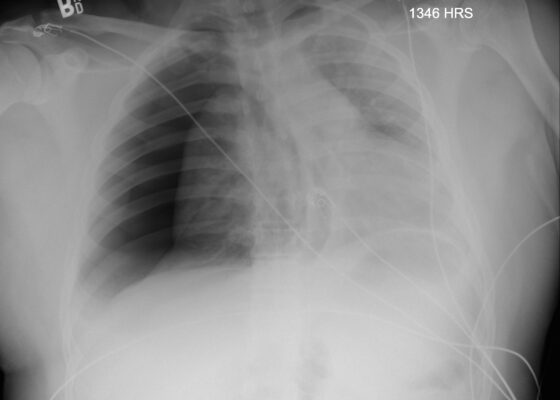
DOI: https://doi.org/10.21980/J8ZD1SChest X-ray demonstrated significant right-sided pneumothorax (with red outline showing border of collapsed right lung) with cardio mediastinal shift to the left (shown by blue arrows) indicative of a tension pneumothorax

Vomiting in Pediatric Patients
DOI: https://doi.org/10.21980/J8P363By the end of this TBL session, learners should be able to: 1) Identify red flag symptoms that should prompt referral for urgent intervention by GI or surgical specialists; 2) recognize how chronicity of the vomiting can alter the differential diagnosis; 3) describe the varying pathways that can cause nausea and vomiting; 4) determine the necessity of imaging tests to confirm and possibly treat various causes of vomiting; 5) interpret imaging studies associated with specific causes of vomiting.
Febrile Seizure Team-based Learning
DOI: https://doi.org/10.21980/J8JD12By the end of this educational session, the learner will: 1) list the characteristics of a simple febrile seizure; 2) discuss the management of a child with a simple vs. complex febrile seizure; 3) discuss the risk factors that correlate with an increased risk of a subsequent febrile seizure; 4) determine when a lumbar puncture should be considered in a febrile child with a seizure; 5) identify when to give anti-epileptics and construct an algorithm for their use; 6) discuss with parents, provide education and return precautions.

What do you do if your relief comes to work intoxicated: An Impaired Provider Scenario
DOI: https://doi.org/10.21980/J8DM0HBy the end of this simulation, learners will be able to: 1) Identify potential impairment in the form of alcohol intoxication in a physician colleague; 2) demonstrate the ability to communicate effectively with the colleague and remove them from the patient care environment; 3) discuss the appropriate next steps in identifying long-term wellness resources for the impaired colleague; and 4) demonstrate understanding of the need to continue to provide care for the patients by moving the case forward.
Extracorporeal Membrane Oxygenation (ECMO) for Refractory Cardiac Arrest
DOI: https://doi.org/10.21980/J88W69ABSTRACT: Audience: Our target audience includes emergency medicine residents/physicians. Introduction: Treating cardiac arrest is a common theme during simulated emergency medicine training; however, less time is focused on treating refractory cases of cardiac arrest. There are varying definitions of refractory cardiac arrest, but it is most commonly defined as the inability to obtain return of spontaneous circulation (ROSC) after 10-30
Agitated Psychiatric Patient
DOI: https://doi.org/10.21980/J85352At the conclusion of the simulation session, learners will be able to: 1) Obtain a relevant focused history and physical examination on the agitated psychiatric patient. 2) Develop a differential for the agitated psychiatric patient, including primary psychiatric conditions and other organic pathologies. 3) Discuss the management of the agitated psychiatric patient, including the different options available for chemical sedation. 4) Prioritize safety of self and staff when caring for an agitated psychiatric patient.
Cardiac Tamponade
DOI: https://doi.org/10.21980/J81D1DBy the end of this simulation session, the learner will be able to: (1) describe a diagnostic differential for dizziness (2) describe the pathophysiology of cardiac tamponade (3) describe the acute management of cardiac tamponade, including fluid bolus and pericardiocentesis (4) describe the electrocardiogram (ECG) findings of pericardial effusion (5) describe the ultrasound findings of cardiac tamponade (6) describe the indications for emergent bedside pericardiocentesis versus medical stabilization and delayed pericardiocentesis for cardiac tamponade (7) describe the procedural steps for pericardiocentesis, and (8) describe your state’s laws regarding disclosure for sentinel events.
Owning the Trauma Bay: Teaching Trauma Resuscitation to Emergency Medicine Residents and Nurses through In-situ Simulation
DOI: https://doi.org/10.21980/J8WK9XABSTRACT: Audience: The following two cases were designed to address learning objectives specific to interns, junior residents, and senior residents in emergency medicine, as well as trauma-certified emergency nurses. Introduction: Traumatic and unintentional injuries account for 5.8 million deaths across the globe each year, with a high proportion of those deaths occurring within the initial hour from the time of

Simulated Mass Casualty Incident Triage Exercise for Training Medical Personnel
DOI: https://doi.org/10.21980/J82H1RBy the end of this exercise, learners should be able to (1) recite the basic START patient categories (2) discuss the physical exam signs associated with each START category, (3) assign roles to medical providers in a mass casualty scenario, (4) accurately categorize patients into triage categories: green, yellow, red, and black, and (5) manage limited resources when demand exceeds availability.