
Posts by JETem
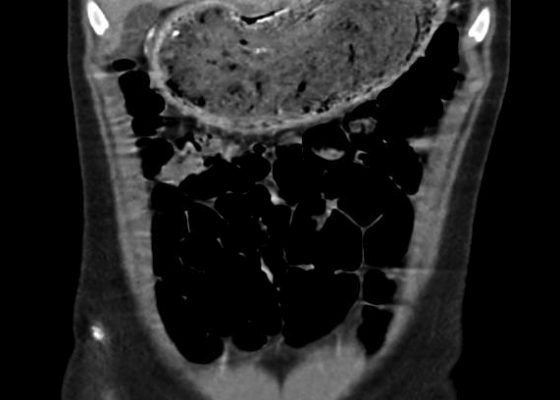

Gastric Bezoar
DOI: https://doi.org/10.21980/J85K5WIn the abdominal radiograph, a nonspecific and non-obstructive bowel gas pattern with no air-fluid level was noted, however the stomach was distended with soft tissue. The CT abdomen/pelvis revealed a distended stomach with undigested heterogeneous contents (presumed bezoar).
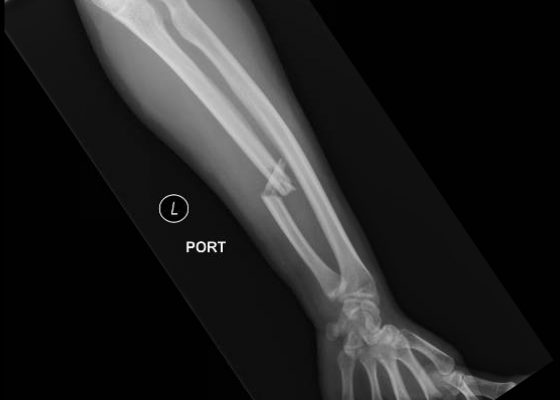
Monteggia Fracture in an Assault Patient
DOI: https://doi.org/10.21980/J81S3ZOn the axial elbow x-ray, the radial head (red arrow) is dislocated anteriorly from the humerus; the humeroulnar articulation is intact. On the AP forearm x-ray, there is a closed, displaced, comminuted fracture of the ulna (blue arrow).
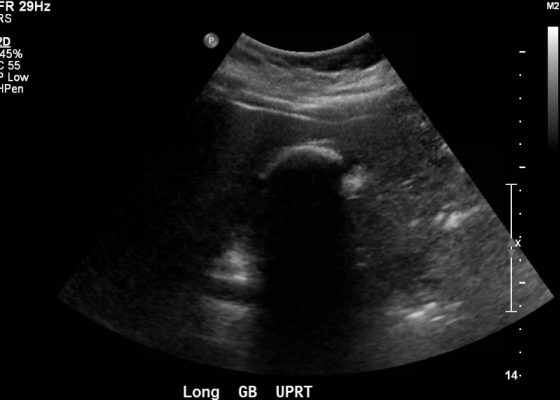
Cholelithiasis: WES Sign
DOI: https://doi.org/10.21980/J8X300Abdominal ultrasound showed the classic presentation of the Wall-Echo-Shadow (WES) sign. The superficial aspect of the gallbladder wall is represented by a hyperechogenic curve. Below this, bile fluid is represented by hypoechogenicity. Underneath the bile fluid is the echo of the dense border created by the collection of gallstones, represented by a hyperechogenic curve. Due to the high density of the gallstones, nothing deeper can be visualized (including other gallstones or the far end of the gallbladder); this is the shadow.

A Formalized Three-Year Emergency Medicine Residency Ultrasound Education Curriculum
DOI: https://doi.org/10.21980/J8RG6HLearners will 1) know the indications for each the 11 ACEP point-of-care ultrasound (POCUS) applications; 2) perform each of the 11 ACEP POCUS applications; 3) integrate POCUS into medical decision-making.

The Acute Red Eye
DOI: https://doi.org/10.21980/J8BC74By the end of this educational session, the learner will: 1) list 10 major causes for an acute red eye; 2) describe historical features that help distinguish between benign and serious causes of the acute red eye; 3) describe physical examination features that help distinguish between benign and serious causes of the acute red eye; and 4) use historical and physical examination features to distinguish between the 10 different causes of the acute red eye.
Transfusion Related Emergencies
DOI: https://doi.org/10.21980/J86P4VAt the end of this didactic session, the learner will be able to: 1) list the various transfusion reactions and their approximate incidence; 2) understand the pathophysiology behind each transfusion reaction; 3) describe the management for each type of transfusion reaction; and 4) discuss the plan for prevention of future transfusion reactions.
Emergencies in Hemophiliacs
DOI: https://doi.org/10.21980/J8301WBy the end of this session learners will be able to: 1) describe the underlying deficiencies of hemophilia A and B; 2) discuss the complications of hemophilia; 3) formulate an appropriate treatment plan for an acutely bleeding hemophiliac; 4) calculate the appropriate factor dosing for a hemophiliac with acute bleeding.