
Posts by JETem
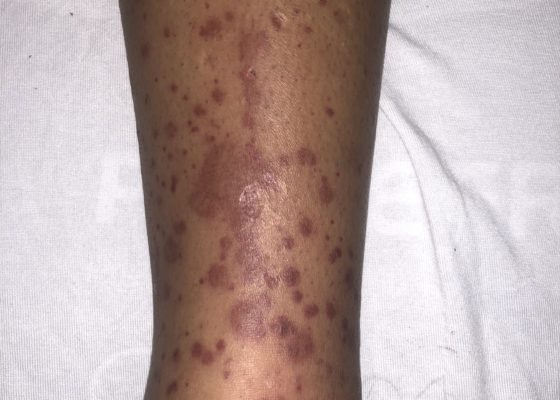

Henoch-Schönlein Purpura in the Adult
DOI: https://doi.org/10.21980/J8QH08The images show a raised, palpable, purpuric rash on the lower extremities, surrounded by a mild, 1+ non-pitting edema. Several of the lesions are exfoliated with serous discharge. There is no surrounding erythema, fluctuance, or lymphangitis to suggest cellulitis. There was no tenderness to palpation; however, pruritus was exacerbated on palpation.

Digital Nerve Block for the Reduction of a Proximal Phalanx Fracture of the Foot – a Case Report
DOI: https://doi.org/10.21980/J8KS8TPlain film of the right foot showed evidence of an oblique fracture of the body of the proximal 4th phalanx (image 2). No other acute traumatic injuries noted in the rest of the bones and joints of the right foot. After performing a digital block of the toe and reduction, repeat imaging showed evidence of successful reduction with anatomic alignment and redemonstration of the fracture line (image 3).

Case Report: Antifreeze Ingestion and Urine Fluorescence
DOI: https://doi.org/10.21980/J8G05TThe patient’s urine sample (right) was compared to a control (left) using a Wood’s lamp. It revealed light green fluorescence under ultraviolet light, which increased suspicion for ethylene glycol poisoning from antifreeze ingestion.


ECG Stampede
DOI: https://doi.org/10.21980/J8PP93ECG Stampede is a unique educational program comprised of a comprehensive, video-based curriculum with accompanying student and instructor guides. ECG Stampede also features an engaging game accessible via modern browsers and dedicated mobile applications for iOS and Android devices. The gamified model presents learners with a batch of ECGs for which they must assign one of four triage acuities.

Status Asthmaticus
DOI: https://doi.org/10.21980/J8JW6SAt the end of this case, the learners should be able to diagnose an asthma exacerbation, provide the appropriate medications, determine when intubation is necessary, and describe the general principles of ventilator management in an asthmatic patient.

Emergency Medicine Curriculum Utilizing the Flipped Classroom Method: Pulmonary Emergencies
DOI: https://doi.org/10.21980/J8F646The educational strategies used in this curriculum include small group case-based modules authored by education faculty and content experts based on the core emergency medicine content outlined in the ABEM Model EM curriculum. The Socratic method, used during small group sessions, encourages active participation; small groups also focus on the synthesis and application of knowledge through the discussion of clinical experiences. The use of free open access medical education (FOAM) resources allows learners to work at their own pace and maximize autonomy. Learners are encouraged to use such resources for preparation prior to small group sessions, and also to review and help solidify important points after the conclusion of in-person discussions.
Novel Emergency Medicine Curriculum Utilizing Self-Directed Learning and the Flipped Classroom Method: Neurologic Emergencies Small Group Module
DOI: https://doi.org/10.21980/J89H0JWe aim to teach the presentation and management of cardiovascular emergencies through the creation of a flipped classroom design. This unique, innovative curriculum utilizes resources chosen by education faculty and resident learners, study questions, real-life experiences, and small group discussions in place of traditional lectures. In doing so, a goal of the curriculum is to encourage self-directed learning, improve understanding and knowledge retention, and improve the educational experience of our residents.
Resuscitation Rotation: A Novel Emergency Medicine Rotation to Augment Resuscitative Training
DOI: https://doi.org/10.21980/J85P9FOur goal is to augment resuscitative education in the ED in order to improve resident skill, confidence, and knowledge of resuscitative treatments.