
Archives

Ethylene Glycol Ingestion
DOI: https://doi.org/10.21980/J8M620By the conclusion of the simulation session, learners will be able to: 1) obtain a thorough toxicologic history, including intent, timing, volume/amount, and assessment for co-ingestions, 2) distinguish the variable clinical signs and symptoms associated with toxic alcohol ingestions, 3) identify metabolic derangements associated with toxic alcohol ingestions, 4) discuss the management of toxic alcohol ingestion, 5) appropriately disposition the patient for admission to intensive care unit (ICU).
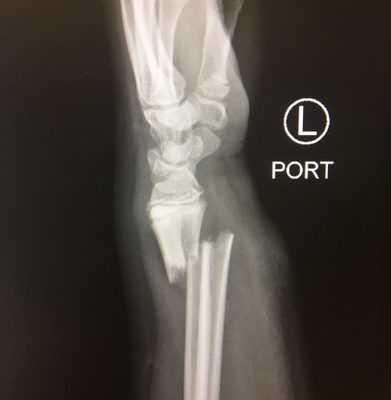
Pediatric Sedation for Forearm Fracture
DOI: https://doi.org/10.21980/J8CS7KAt the end of this simulation, participants will: 1) review options for pain control in pediatric patients, 2) perform a pre-sedation history and physical exam, 3) review the indications and contraindications for pediatric moderate sedation, 4) understand components of consent, and get consent from the patient’s parent, 5) list medication options for moderate sedation in a pediatric patient and review their appropriate doses, indications, contraindications, and side effects, 6) discuss management of moderate sedation complications, and 7) review criteria for discharging a patient after sedation.
Out-of-Hospital Delivery of a Live Newborn Requiring Resuscitation
DOI: https://doi.org/10.21980/J8834MBy the end of this simulation session, the learner will be able to: 1) perform a neonatal assessment, 2) identify which neonates require resuscitation, 3) understand the principles of neonatal resuscitation, 4) describe proper airway management in neonatal resuscitation, 5) discuss underlying etiologies or pathologies that may lead to a neonate to require resuscitation, and 6) communicate effectively with team members and nursing staff during the resuscitation of a critically ill neonate.
Cocaine-induced Myocardial Infarction and Pulmonary Edema
DOI: https://doi.org/10.21980/J8ZS87By the end of this simulation session, the learners will be able to:1) Determine appropriate diagnostics in a patient with likely cocaine toxicity. 2) Identify and manage respiratory failure. 3) Identify and manage a ST-elevation myocardial infarction (STEMI) and pulmonary edema. 4) Identify and manage cocaine toxicity with benzodiazepines. 5) Determine appropriate disposition of the patient to the cardiac catheterization lab and an intensive care unit (ICU). 6) Demonstrate effective communication and teamwork during resuscitation of a critically ill patient.
Prehospital Cardiac Arrest Management Simulation
DOI: https://doi.org/10.21980/J8V057At the end of this simulation learners will be able to: 1) Perform team-focused CPR using effective leadership and communication skills during prehospital resuscitation. 2) Employ high-quality CPR with an emphasis on compressions and early defibrillation. 3) Demonstrate appropriate airway management utilizing an oropharyngeal airway and bag-valve-mask, blind-insertion airway device, and/or endotracheal intubation during cardiac arrest. 4) Recognize and appropriately defibrillate pulseless ventricular tachycardia and ventricular fibrillation. 5) Formulate an appropriate differential diagnosis for pulseless electrical activity.

Acute Hemolytic Transfusion Reaction
DOI: https://doi.org/10.21980/J88D2ZBy the end of this simulation session, the learner will be able to: 1) Recognize the clinical signs and symptoms associated with transfusion reactions. 2) Discuss necessary systems-based management of potential transfusion reactions, such as notifying the blood bank and evaluating to see if another patienta accidentally received a wrong unit of blood. 3) Discuss the management of various transfusion reactions. 4) Appropriately disposition the patient to an intensive care unit (ICU) or stepdown unit. 5) Effectively communicate with team members and nursing staff during the resuscitation of a critically ill patient.
In-Flight Emergency: Altered Mental Status Secondary to Hypoglycemia
DOI: https://doi.org/10.21980/J84M01By the end of this simulation session, learners will be able to: 1) Discuss the challenges associated with in-flight emergencies. 2) List what is available in United States (US) commercial airline medical kits. 3) Discuss an appropriate differential diagnosis for a patient with altered mental status (AMS). 4) Demonstrate appropriate treatment of hypoglycemia. 5) Describe possible complications in diabetic patients with insulin pumps when flying. 6) Review the legal ramifications of responding to an in-flight emergency.
High Fidelity In Situ Shoulder Dystocia Simulation
DOI: https://doi.org/10.21980/J88305DAt the end of this simulation, learners will: 1) Recognize impending delivery and mobilize appropriate resources (ie, both obstetrics [OB] and NICU/pediatrics); 2) Identify risk factors for shoulder dystocia based on history and physical; 3) Recognize shoulder dystocia during delivery; 4) Demonstrate maneuvers to relieve shoulder dystocia; 5) Communicate with team members and nursing staff during resuscitation of a critically ill patient.