
JETem
  • Home
  • About
    • Aim and Scope
    • Our Team
    • Editorial Board
    • FAQ
  • Issues
    • Current Issue
    • Ahead of Print
    • Past Issues
  • Visual EM
    • Latest Visual EM
    • Search Visual EM
    • Thumbnail Library
  • For Authors
    • Instructions for Authors
    • Submit to JETem
    • Photo Consent
    • Policies
      • Peer Review Policy
      • Copyright Policy
      • Editorial Policy, Ethics and Responsibilities
      • Conflicts of Interest & Informed Consent
      • Open Access Policy
      • Acceptance Fee
  • For Reviewers
    • Instructions for JETem Reviewers
    • Interested in Being a JETem Reviewer?
  • Topic
    • Abdominal/Gastroenterology
    • Administration
    • Board Review
    • Cardiology/Vascular
    • Certifying Exam Cases
      • Clinical Decision-Making
      • Prioritization
      • Communication
      • Procedure & Ultrasound
    • Clinical Informatics, Telehealth and Technology
    • Dermatology
    • EMS
    • Endocrine
    • ENT
    • Faculty Development
    • Genitourinary
    • Geriatrics
    • Hematology/Oncology
    • Infectious Disease
    • Miscellaneous (stats, etc)
    • Neurology
    • Ob/Gyn
    • Ophthalmology
    • Orthopedics
    • Pediatrics
    • Pharmacology
    • Procedures
    • Psychiatry
    • Renal/Electrolytes/Nutrition
    • Respiratory
    • Social Determinants of Health
    • Toxicology
    • Trauma
    • Ultrasound
    • Urology
    • Wellness
    • Wilderness
  • Modality
    • Certifying Exam Practice Cases
      • Clinical Care Cases
      • Communication & Procedural Cases
      • Old School Oral Board Cases
    • Curricula
    • Innovations
    • Lectures
    • Podcasts
    • Simulation
    • Small Group Learning
    • Team Based Learning (TBL)
    • Visual EM
  • Contact Us

Innovations

Creative Commons images

Low Cost Task Trainer for Neonatal Umbilical Catheterization

Caitlin Walsh Feeks, DO* and Linda Fan, MD*

DOI: https://doi.org/10.21980/J8HW6GIssue 3:3[mrp_rating_result]
By the end of this instructional session learners should: 1) Discuss the indications, contraindications, and complications associated with umbilical catheterization. 2) Competently perform umbilical catheterization on the task trainer. 3) Demonstrate proper securement of the catheter.
ProceduresInnovationsPediatrics
Creative Commons images

A Low Cost Escharotomy Simulation Model for Residency Education

Christopher Sampson, MD*, Catherine D Parker, MD*, Edward Burns, MD^, Marty Ruyan, BSN, RN†, Dena Higbee, EdS† and Timothy Koboldt, MD*

DOI: https://doi.org/10.21980/J8D34V Issue 3:3[mrp_rating_result]
By the end of this educational session, the learner will be able to: 1) Understand the indications for an escharotomy. 2) List equipment needed to perform an escharotomy. 3) Demonstrate how to perform an escharotomy. 4) Perform an escharotomy and experience the sensation of cutting through simulated burned tissue. 5) Understand post-escharotomy management and referral to specialist.
ProceduresInnovationsTrauma

The Use of a Social Media Based Curriculum for Newly Matched Interns Transitioning into Emergency Medicine Residency

Joel C Park, MD*, Miriam Kulkarni, MD* and Mary McLean, MD*

DOI: https://doi.org/10.21980/J8F92GIssue 3:2[mrp_rating_result]
This curriculum is designed to bridge this gap by fostering an environment in which incoming interns can communicate, collaborate, and practice clinical reasoning with each other and faculty prior to their arrival in residency. The goals and objectives were tailored to the Accreditation Council for Graduate Medical Education (ACGME) level 1 milestones in patient care. 1) Interpret basic ECGs; 2) Demonstrate ability to interpret basic radiographs; 3) Identify common visual diagnoses; 4) Identify common neurological emergencies on head imaging; 5) Recognize basic airway anatomy; 6) Demonstrate successful application of FOAMed resources to clinical cases; 7) Interpret common ultrasound images; 8) Describe common ED procedures; 9) Demonstrate fundamental knowledge of evidence-based medicine and biostatistics 
Miscellaneous (stats, etc)Innovations

Hosting an eConference: Interactive video conference grand rounds between two institutions

Jeffrey Rixe, MD*, Kiersten Carter, MD^, Alexander Y Sheng, MD*, Jordan Spector, MD*, Katie Doering, MD^, Jeffrey Chien, MD^ and Nikita Joshi, MD^

DOI: https://doi.org/10.21980/J88P80Issue 3:1[mrp_rating_result]
Our objectives were to create and implement a novel virtual conference format through the integration of social media tools which allows for interdisciplinary and multi-site participation to enhance EM resident education. We wish to outline the steps required to reproduce this innovative session and share lessons learned.
InnovationsLectures
Creative Commons images

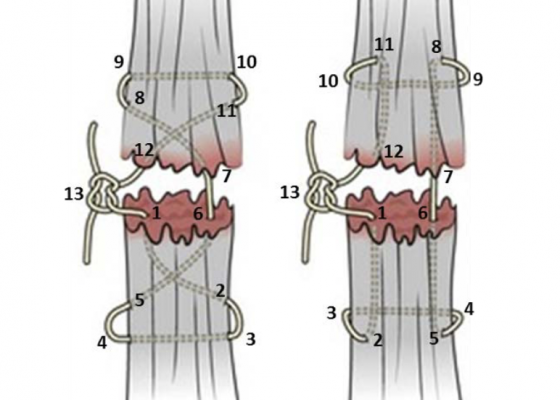
A Simulation Model for Extensor Tendon Repair

Elizabeth Aronstam, DO* and David T Overton, MD*

DOI: https://doi.org/10.21980/J8VS7X Issue 2:3[mrp_rating_result]
By the end of this educational session, the learner will be able to: 1) List the indications for extensor tendon repair in the emergency department, 2) recognize the indications for referral to orthopedic or hand surgery, 3) list the risks and benefits of emergency department extensor tendon repair, 4) perform an appropriate physical examination for a patient with a potential extensor tendon laceration, 5) list the maximum time limit of tourniquet application for this procedure, 6) list the materials needed for extensor tendon repair in the emergency department, 7) successfully repair a completely severed extensor tendon using four different techniques: horizontal mattress, figure of eight, modified Kessler and modified Bunnell, and 8) describe the appropriate splinting of a repaired extensor tendon.
ProceduresInnovationsOrthopedics
Creative Commons images

Realistic Chest Tube Simulator Using Pork Belly with Skin

Donald Patrick Mebust, MD* and Jonathan Kei, MD*

DOI: https://doi.org/10.21980/J8R03J Issue 2:3[mrp_rating_result]
By the end of this instructional session learners will be able to: 1) discuss the indications, contraindications, and complications associated with chest tube thoracostomy, 2) competently perform chest tube insertion on a simulator, and 3) properly secure chest tube.
ProceduresInnovationsRespiratoryTrauma

The Casserole Perimortem Caesarean Section Model

Nur-Ain Nadir, MD, MHPE*, Clint Brian LeClair, MD*, Ammar Ahmed, MD* and Gregory Podolej, MD*

DOI: https://doi.org/10.21980/J8FK8H Issue 2:3[mrp_rating_result]
At the end of this 1-hour activity learners will: 1) describe the indications, contraindications and complications of the PCS, and 2) demonstrate the performance of a PCS.
InnovationsOb/Gyn
Creative Commons images

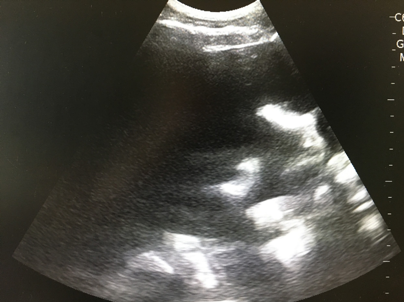
Introducing point-of-care ultrasound through competency-based simulation education using a fractured chicken bone model

Nathan L Haas, MD,* Elise Hart, MD,† Mary RC Haas, MD,* and Trent Reed, DO^

DOI: https://doi.org/10.21980/J8GG95 Issue 2:3[mrp_rating_result]
To introduce medical students to PoCUS with an inexpensive, reproducible, and educationally effective model using fractured chicken bones set in gelatin, and to assess medical students’ abilities to identify simulated long-bone fractures using PoCUS.
UltrasoundInnovationsOrthopedics
«‹5›
Page 5 of 6

JETem is an online, open access, peer-reviewed, journal-repository for EM educators. We are PMC Indexed.

Most Viewed

  • Escape Intern Orientation! — A Capstone and Team Building Activity for New EM Interns
  • Enhancing Relationship-Centered Communication and Feedback in Emergency Medicine Through Applied Improvisation (EM-PROV)
  • Postpartum Complications Modified TBL
  • Midline Catheters: A Novel Curriculum for Emergency Medicine Residents
  • Stopping Fistula Hemorrhage without Bleeding Time and Money – A Low Cost, Low Resource Hemodialysis Fistula Model for Emergency Medicine Residents

Visit Our Collaborators


Creative Commons Licence
This work is licensed under a Creative Commons Attribution 4.0 International License.

About

Education

Learners should benefit from active learning. JETem accepts submissions of team-based learning, small group learning, simulation, podcasts, lectures, innovations, curricula, question sets, and visualEM.

Scholarship

We believe educators should advance through the scholarship of their educational work. JETem gives educators the opportunity to publish scholarly academic work so that it may be widely distributed, thereby increasing the significance of their results.

Links

  • Home
  • Aim and Scope
  • Current Issue
  • For Reviewers
  • Instructions for Authors
  • Contact Us

Newsletter

Sign up to receive updates from JETem regarding newly published issues and findings.

Copyright Creative Commons Attribution 4.0 International